Yes, you can use normal LED lights to grow plants indoors, but whether they actually work depends almost entirely on the specific bulb or fixture you have, how close you put it to your plants, and how long you run it each day. The label 'grow light' does not automatically make a light good for plants, and a plain LED bulb from the hardware store is not automatically useless. What matters is spectrum, intensity, and duration. Get those three things right and your plants will grow. Get them wrong and you will end up with sad, leggy, yellowing plants no matter what the packaging says.
Can I Use Normal LED Lights to Grow Plants Indoors?
Marcus Holloway
24 Mar 2026
The direct answer: yes, but with real conditions attached
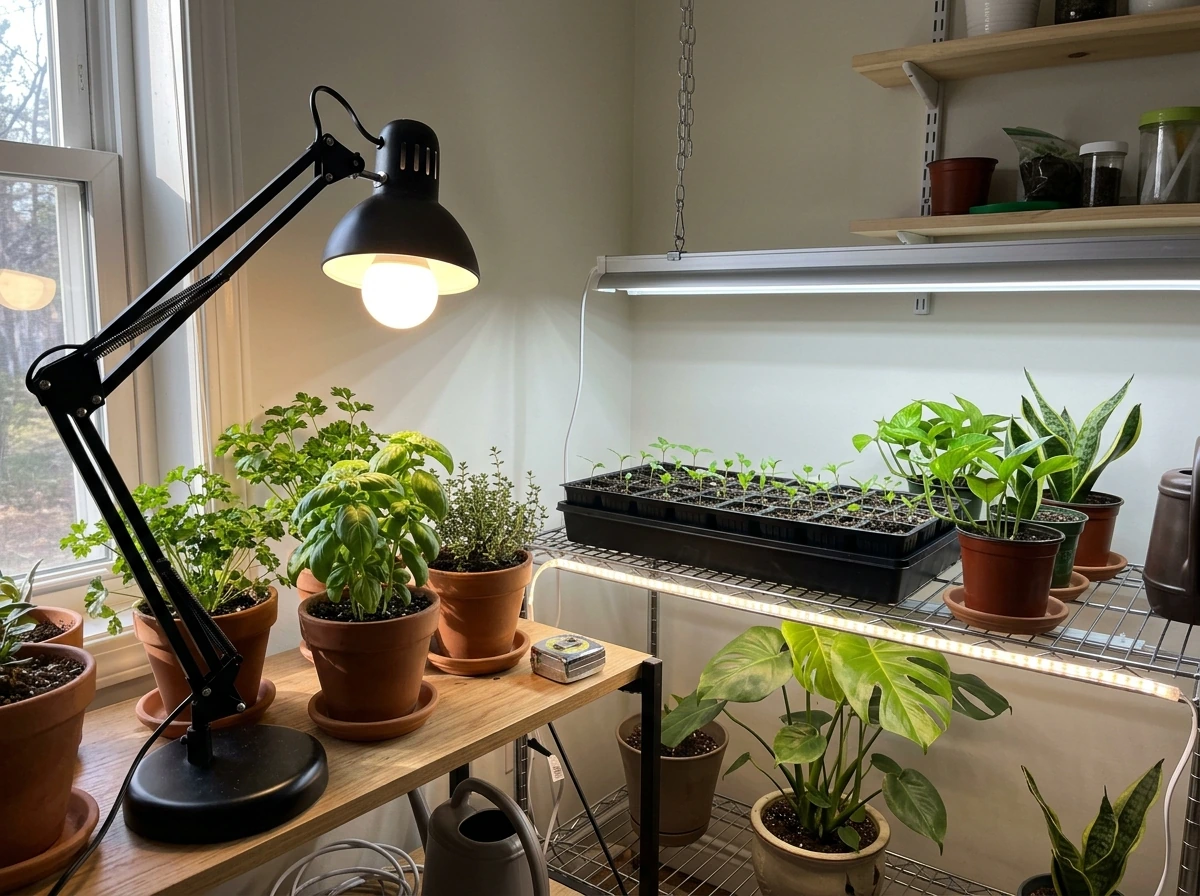
Regular LED bulbs, shop lights, and LED strip lights can support plant growth. I have grown herbs under $12 LED shop lights from a big-box store with perfectly acceptable results. The honest caveat is that most standard LEDs were designed to make a room look bright to human eyes, not to deliver the specific wavelengths and intensity that drive photosynthesis. That means they can work for low-light and medium-light plants, but they will often fall short for fruiting crops or high-light succulents without some deliberate setup choices.
The core question to ask about any LED you already own is not 'is this a grow light?' but rather 'does this produce enough useful light, close enough to my plants, for long enough each day?' If the answer to all three is yes, your plants will grow. If any one of them is off, you will see the consequences pretty quickly in the form of stretching stems, pale leaves, or just very slow progress.
What actually makes light work for plants
Plants use light through a process called photosynthesis, and not all light is equally useful for that process. The relevant range is called PAR, or photosynthetically active radiation, which covers wavelengths from about 400 to 700 nanometers. The measurement that actually matters at the leaf surface is PPFD, which stands for photosynthetic photon flux density and is measured in micromoles per square meter per second (μmol/m²/s). Think of PPFD as the rate at which usable photons are landing on your plant's leaves right now.
The other key concept is DLI, or daily light integral, which is basically the total dose of usable light your plant receives in a full day. It is calculated by multiplying PPFD by the number of hours the light runs, then multiplying by 0.0036. University of Maine Extension publishes PPFD targets by plant type: low-light houseplants and succulents need roughly 100 to 200 μmol/m²/s, while fruiting and flowering crops can need 400 to 1,200 μmol/m²/s. Most regular LEDs can hit the lower end of that range if positioned correctly. Very few can hit the upper end.
Spectrum: red, blue, and the full-spectrum debate
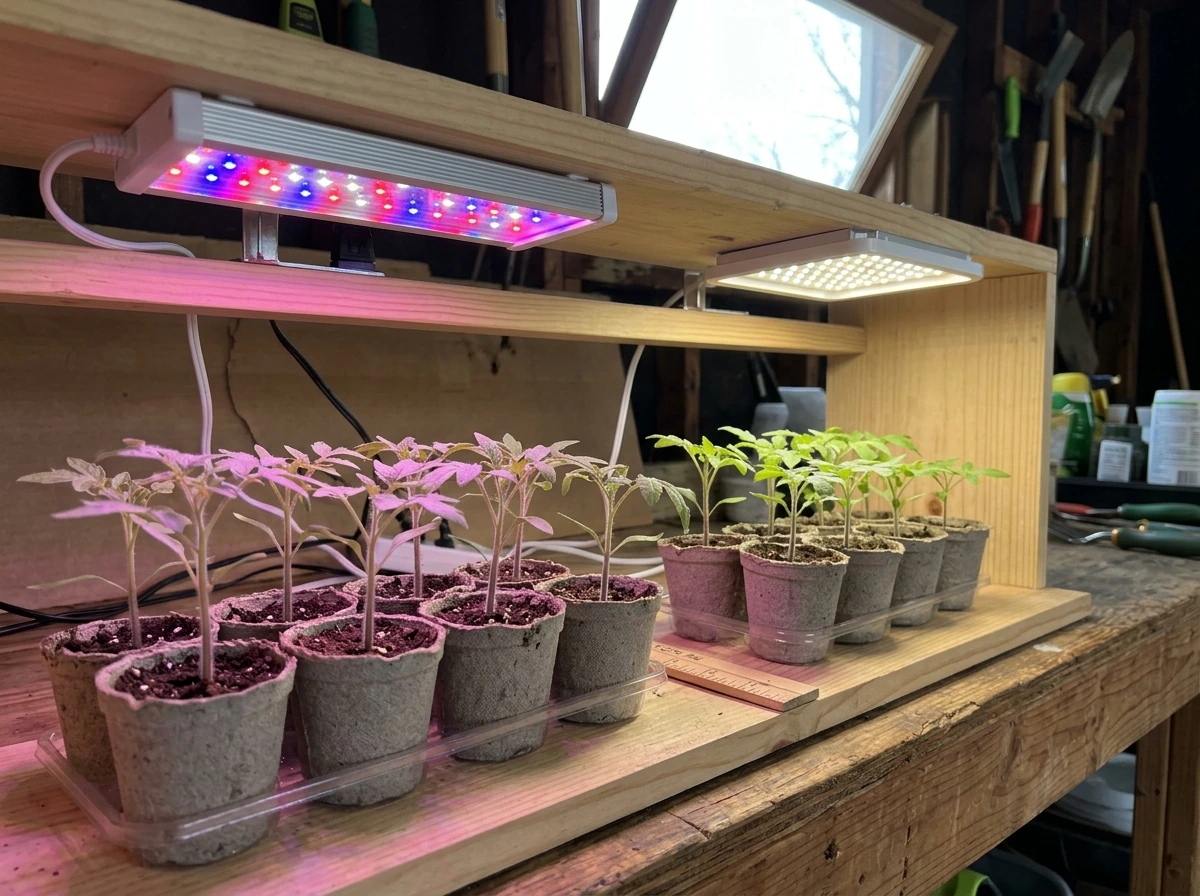
Red and blue wavelengths are the most efficiently used by chlorophyll for photosynthesis. Dedicated grow lights lean heavily on those wavelengths, which is why they look pink or purple. Standard white LEDs spread energy across the whole visible spectrum, including green, which plants use less efficiently. Research from Michigan State University Extension confirms that green light is not totally wasted, since it still contributes to photosynthesis and penetrates the leaf canopy better than red or blue in some situations. But you are getting less photosynthetic bang per watt from a white LED compared to a tuned grow light. For low-light plants this trade-off is manageable. For high-demand crops it starts to matter a lot.
Marketing terms like 'full spectrum' on consumer LED bulbs are often meaningless. A bulb that produces white light is technically full spectrum in a loose sense, but that tells you nothing about how much PAR it outputs or whether the spectrum is actually optimized for plant growth. Look for actual PPFD data or at least wattage and lumen output when evaluating a bulb. Lumens measure brightness for human eyes, not plant growth, but a higher lumen output from the same bulb type generally correlates with more PAR reaching your plants.
What you can do with common LED types you already have
Not all regular LEDs are equal. Here is a practical breakdown of the most common types people try to use for plants.
Standard LED bulbs (A19 and similar screw-in types)
A typical 9 to 10 watt LED bulb putting out around 800 lumens can grow low-light plants like pothos, snake plants, or peace lilies if positioned 6 to 12 inches from the foliage. It will not grow tomatoes or peppers. The light output drops off fast with distance, so the closer you can position it, the better. Using a reflective desk lamp or a clamp light helps focus output toward the plant instead of spreading it around the room. If you want to grow herbs like basil or parsley under a single bulb, use two or three of them in a cluster above the plants, not just one.
LED shop lights (4-foot bar fixtures)
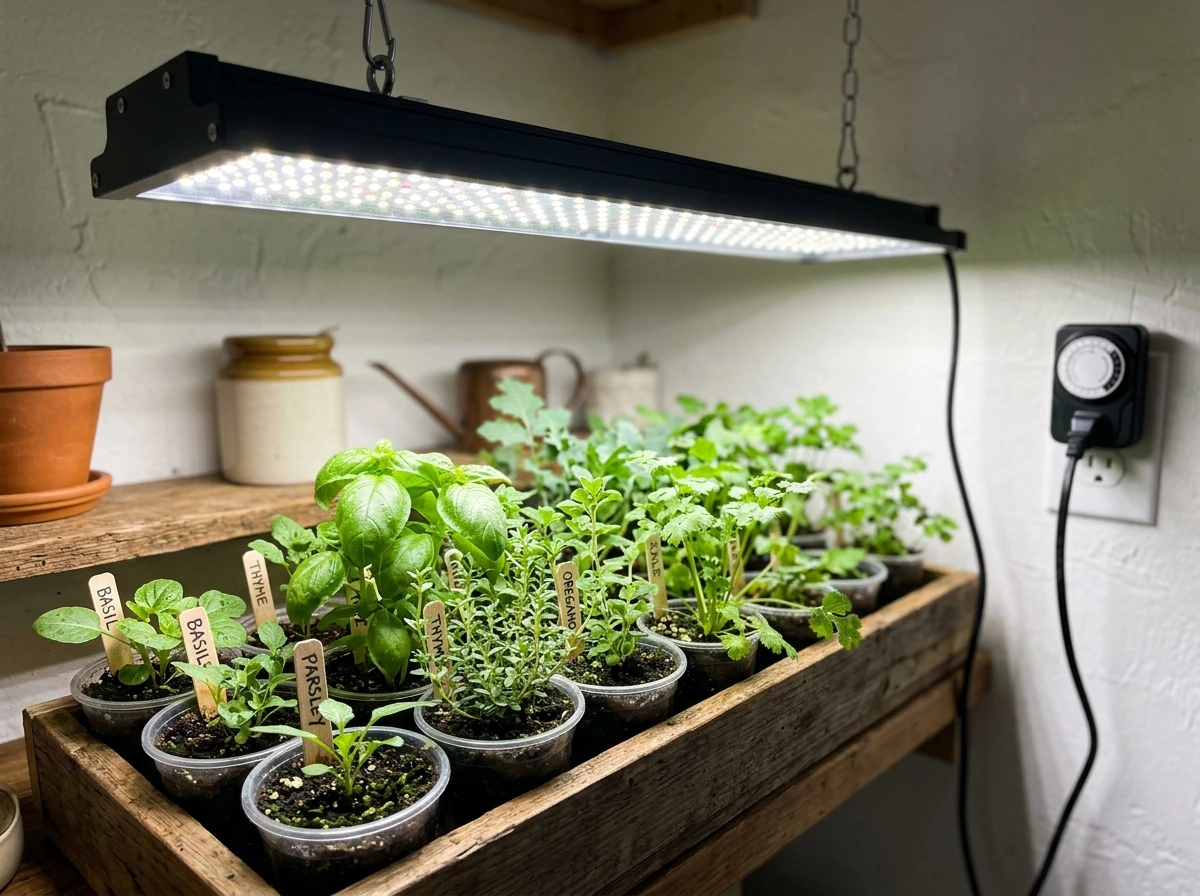
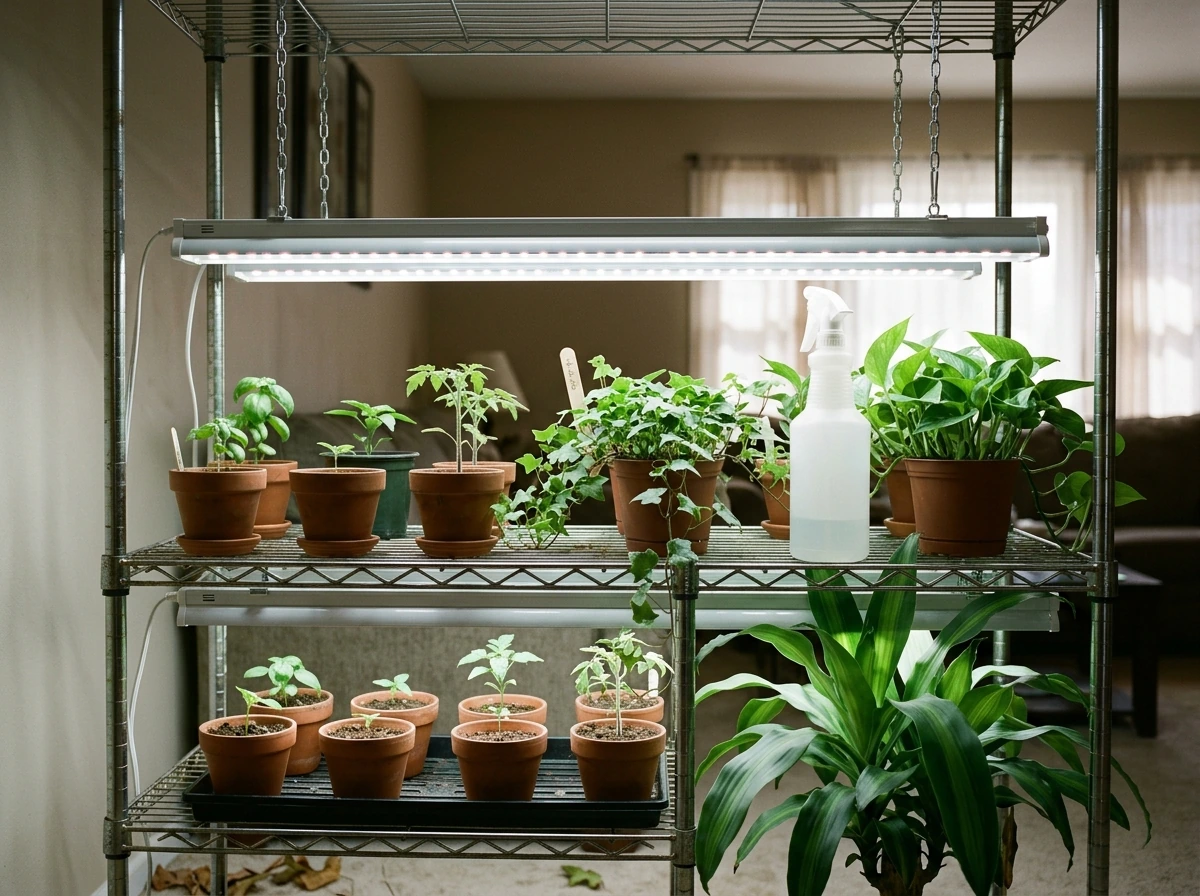
This is probably the best budget option for growing plants under regular LEDs. A 40 to 50 watt, 4-foot LED shop light typically puts out 4,000 to 5,000 lumens and covers a reasonable growing area when hung 6 to 18 inches above plants. University of New Hampshire Extension tested LED light bars and found that mounting height dramatically changes how long you need to run the light each day to hit your DLI target: a fixture that meets the target in 8 hours at 8 inches may need to run 16 hours at 20 inches. For seedlings and leafy greens, two 4-foot shop lights side by side hung 6 to 10 inches above the tray is a genuinely effective setup. I have started dozens of vegetable seedlings this way with good results.
LED strip lights
LED strip lights are tempting because they are cheap, flexible, and easy to mount anywhere. The honest truth is that most consumer LED strips are not bright enough to do serious plant growing on their own. A standard 12V strip light produces far less output per foot than a shop light fixture. They can work as supplemental lighting in a shelf setup where you are running them a few inches from the plants and adding to ambient light, but as a standalone grow solution they usually fall short except for very low-light plants. If you go this route, use a UL-listed strip and a proper power supply, not a bare strip plugged into a random adapter, because strip lights wired improperly are a legitimate fire and shock risk.
How to set up your LEDs so they actually do something
Distance from plants
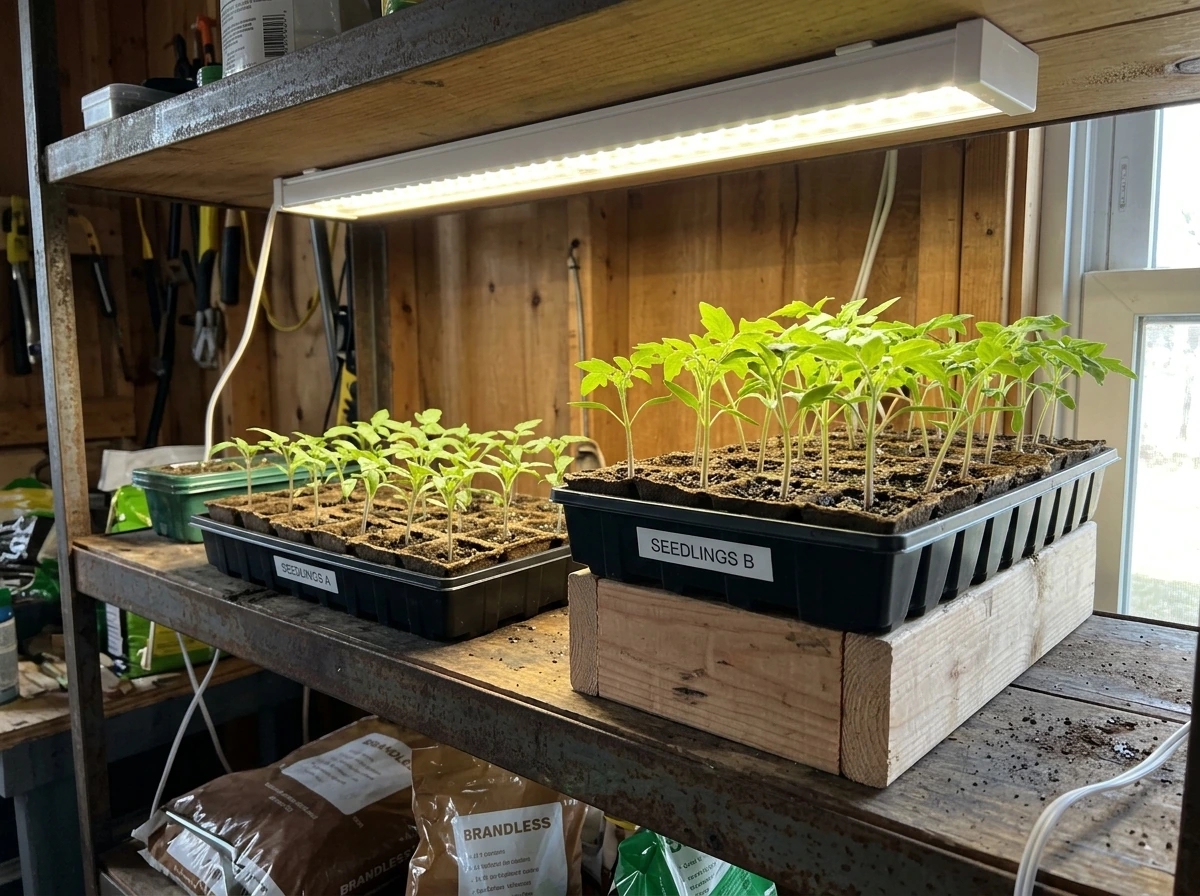
Light intensity drops dramatically as you move away from the source. This is not a minor effect: doubling the distance from a light source can cut intensity by 75 percent. For most standard LED bulbs and shop lights, you want to be within 6 to 18 inches of the plant canopy. Seedlings and high-light plants should be at the closer end of that range. Low-light houseplants can tolerate 18 to 24 inches. The moment you go farther than 24 inches with a regular LED, you are probably not delivering enough PPFD to make a real difference.
How long to run your lights each day
Iowa State University Extension recommends using a timer and keeping the photoperiod between 8 and 16 hours per day for most indoor plant situations. Dark periods are important for many plants, so running lights 24 hours is not a good idea even if it sounds efficient. A practical starting point for most setups is 14 to 16 hours per day for seedlings and high-light plants, and 12 to 14 hours for established houseplants supplementing low window light. A cheap outlet timer costs about $10 and removes all the guesswork. It is one of the best investments you can make in a DIY grow setup.
Coverage and layout
A single LED bulb or strip covers a very small area well. For a 2-foot by 4-foot growing tray, you need multiple fixtures or a long shop light. Position lights directly above the plant canopy rather than to the side, since overhead lighting distributes more evenly and avoids one-sided growth. If you are using a shelving unit, mount a shop light under each shelf so every tier gets its own dedicated light source. Reflective surfaces like white foam board or Mylar around your growing area help bounce stray light back toward the plants and meaningfully improve efficiency without costing much.
Which plants will actually grow well, and which will struggle
The honest answer is that regular LEDs work best for low-light and medium-light plants. University of Maine Extension data on PPFD targets by plant type gives a useful picture of what is realistic:
| Plant Type | PPFD Target (μmol/m²/s) | Realistic with Regular LEDs? |
|---|---|---|
| Low-light houseplants (pothos, snake plant, peace lily) | 50–150 | Yes, with bulbs or shop lights positioned correctly |
| Herbs and leafy greens (basil, lettuce, spinach) | 150–250 | Yes, with shop lights at 6–12 inches |
| Succulents and cacti | 100–200 | Yes for most, though output consistency matters |
| Seedling starts (vegetables, flowers) | 200–400 | Possible with two shop lights close to the tray |
| Fruiting crops (tomatoes, peppers, cucumbers) | 400–1,200 | Unlikely with standard LEDs; a purpose-built grow light is needed |
| High-light orchids and tropical flowers | 300–600 | Marginal; results will be slow or incomplete |
If you are mainly trying to keep houseplants alive through winter or get seedlings started in spring, regular LEDs are a completely reasonable solution. If you want to grow tomatoes to harvest under lights indoors all year, invest in a proper grow light. The gap in output between a $15 shop light and what a fruiting crop needs is too large to bridge with positioning tricks alone.
Troubleshooting: what your plants are telling you
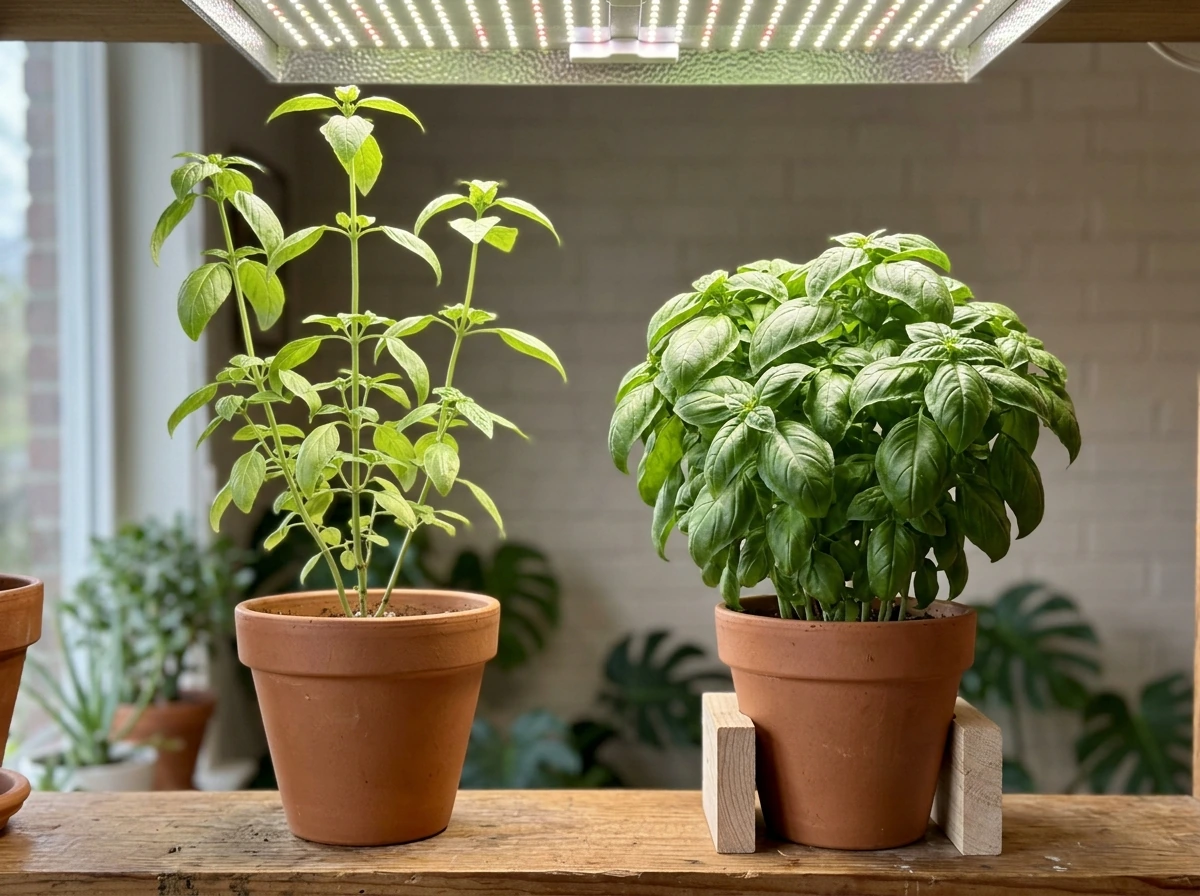
Plants give pretty clear signals when the light is not right. Here are the most common problems and what they usually mean:
- Stretching or leggy growth (long stems, wide spacing between leaves): the plant is reaching for more light. Move the fixture closer, add another light, or extend daily hours. This is the single most common sign of insufficient PPFD.
- Pale or yellow-green leaves on new growth: can indicate low light intensity or, in some cases, the wrong spectrum. Try moving the light closer before assuming the bulb is broken.
- Leaves curling upward or showing bleached patches: this usually means the light is too close or too intense. Back off by 4 to 6 inches and monitor.
- Slow growth with otherwise healthy-looking leaves: the plant is getting by but not thriving. Check your daily hours first, then consider whether your fixture is simply underpowered for that species.
- One-sided growth (plant leaning toward a window or away from the light): reposition the light directly overhead or rotate the pot every few days.
If you want a more objective check, a basic light meter or a smartphone app that measures lux can help you compare your setup to targets. Lux is not the same as PPFD, but as a rough benchmark, most indoor plants benefit from at least 2,000 to 5,000 lux at the leaf surface from supplemental lighting. Low-light plants can do fine at 1,000 lux. Fruiting crops want 10,000 lux or more, which is very hard to achieve with regular LEDs.
Safety, eye health, and myths worth clearing up
Are LEDs safe to run for 14 to 16 hours a day?
Standard LED bulbs and UL-listed shop lights are designed to run for extended periods. LEDs run much cooler than incandescent or HID lights, so heat buildup is rarely a concern with quality fixtures. That said, LED strip lights are a different story. Cheap, unrated strips run hot at the connection points and can be a fire risk, especially if they are poorly made or using an undersized power supply. Always use UL-listed LED strips and matching power supplies. UL listing means a representative sample was tested for fire and electric shock risks under standards like UL 1598 for luminaires and UL 8750 for LED equipment. If the strip or driver does not have a UL mark, that is a meaningful safety gap, not just a formality. can white led lights grow plants can white led lights grow plants
Eye safety and blue light
Regular LED bulbs and shop lights at normal viewing distances are not dangerous to your eyes in typical use. The blue-light hazard risk associated with LEDs is primarily a concern with very high-intensity grow light arrays (the kind used in commercial operations) and mainly when workers are looking directly into the light source for extended periods. Research on retinal phototoxicity is clear that the risk scales with intensity and duration of direct exposure. For a home setup with a shop light or a few LED bulbs, normal awareness is sufficient: don't stare into the bulb, and you are fine. If you are running multiple high-output fixtures in a small enclosed space, inexpensive blue-light filtering glasses are a sensible precaution.
Common myths to ignore
- Myth: you need a purple/pink grow light for plants to grow. White LEDs with sufficient output work, especially for low-light and medium-light plants. Color is a factor, but intensity and duration matter more at the beginner level.
- Myth: more wattage always means better results. Efficiency and spectrum matter too. A well-placed 40-watt shop light often outperforms a poorly positioned 100-watt bulb.
- Myth: LED lights will give you a tan or damage your skin. Standard LEDs do not emit significant UV radiation. They will not tan you, and there is no meaningful UV risk from running plant lights in your home.
- Myth: leaving LEDs on 24 hours gives plants more growth. Many plants need a dark period for proper physiological function, and continuous light can actually stress some species. Stick to 14 to 16 hours maximum.
- Myth: 'full spectrum' on the label means the light is optimized for plants. It usually just means the light looks white to human eyes. Always look for PPFD data or at least actual wattage if you want to compare plant-growing effectiveness.
Where to go from here
If you are just starting out, use what you have. A $15 LED shop lights from a hardware store, hung 8 to 12 inches above a tray of seedlings and run on a timer for 14 to 16 hours a day, will get you meaningful results for herbs, leafy greens, and most common houseplants. Start there, watch how your plants respond, and adjust based on what you see. Stretching means you need more light or closer placement. Bleaching means you need more distance. Slow growth with healthy leaves means longer hours or more fixtures.
If you decide you want to step up to a purpose-built grow light, the jump in performance for flowering and fruiting plants is real and worth it. But do not let the perfect be the enemy of the good. Plenty of successful indoor gardeners have grown beautiful plants under nothing more than a couple of LED shop lights and a basic outlet timer. You do not need specialized equipment to get started today.
FAQ
If I use a regular cool-white or warm-white LED bulb, will that work for plants indoors?
No, “white” does not automatically mean “plant-ready.” White LEDs can work well for low-light plants, but what you really need is enough PPFD at the leaf, delivered for enough hours to hit your DLI goal. If your plants stretch or stay pale, it usually means the PPFD is too low or the light is too far away, not that the color isn’t white enough.
Can I dim normal LED lights and still get good growth indoors?
Some people use dimmers or run LEDs at reduced power, and it usually works only if you still maintain your target PPFD and DLI. Because PPFD drops with lower output and distance, a dimmed setup can quickly fall short for fruiting or high-light plants even if the timer hours stay the same. If you dim, compensate by adding fixtures or moving closer within safe spacing.
How close can I safely place a normal LED bulb or shop light to my plants?
Yes, but you need to treat “how close” as a power and heat management problem, not just a photosynthesis problem. If your fixture is not designed for plant proximity, you may end up with weakened plastics, degraded drivers, or (for strips) overheating at connections. Use quality, enclosed shop lights for close placement, and for strips, only use UL-listed strips and the correct power supply mounted so heat can escape.
Is it better to run normal LEDs 24 hours a day to speed up growth?
Yes, you should be consistent about daily schedule. Many plants need a real dark period, so 24-hour light commonly causes weaker growth or stretched habits. A timer is the easiest fix, and as a starting point you can use the same ranges as the article (more hours for seedlings and high-light plants, fewer for established houseplants supplementing windows).
Why do my seedlings look uneven, even though the light is “strong enough”?
Coverage is a bigger limitation than people expect. A single bulb may grow one area well while the rest of the tray stays dim, leading to uneven size and one-sided leaning even if you hit your target near the brightest spot. For larger trays, use multiple fixtures or a long shop light and keep them centered overhead.
How can I tell if my bulb’s lumens are enough for plants if I do not have PPFD numbers?
Often, the issue is that lumen or wattage alone is not a reliable predictor for plant performance. If you only know lumens, you can end up with a bright-looking light that still delivers insufficient PPFD at the leaf surface. If possible, use a PPFD-capable light meter or adjust placement and number of fixtures based on plant response (stretching means too little PPFD, bleaching can mean too much intensity or too much heat).
Will LED strip lights alone be enough to grow herbs or vegetables?
Light from LED strips can work as supplemental lighting, but standalone strips usually underdeliver unless they are very close and/or paired with other light sources. If you are using strips on a shelf, place them close to the canopy, add reflective sides, and confirm the plants are not stretching. For fruiting crops, plan on upgrading to higher output fixtures.
Can I make regular LEDs more effective without buying a new light?
Plants can use light more efficiently when it is delivered at the leaf, so you can improve results with optics and reflection rather than buying stronger lights. Use white reflective surfaces around the growing area and aim for overhead positioning. Even small reductions in wasted light can matter because your real constraint is hitting PPFD and DLI at the canopy.
When is it actually worth replacing normal LEDs with a dedicated grow light?
Switching from “regular LED” to a purpose-built grow light typically helps most when you need higher DLI, like fruiting and continuous harvest crops. The jump is less dramatic for keeping houseplants alive or starting low-light seedlings. A practical decision aid is this, if your plants need more than about the low-light PPFD range for your goals, regular LEDs often require too many fixtures or too much close placement to be cost-effective.
What do the most common lighting symptoms mean, and what should I change first?
It depends on what symptom you are seeing. Stretching and leaning usually point to insufficient PPFD or the light being too far away, pale or yellow leaves often indicate too little light over time or not enough DLI, while bleaching usually means the light is too intense for the distance or you are acclimating too quickly. Adjust distance first in small steps, and keep the day length stable while you troubleshoot.
Can I rely on a smartphone lux app to dial in my LED grow setup?
A phone lux app can help you compare setups, but it is not the same as PPFD, because lux weights light for human vision. Use lux mainly as a rough check for whether you are in the ballpark, then verify with plant response. If you routinely need to stack many fixtures to raise lux, you may still be short on usable photons.
Should I use one strong LED or several smaller ones for indoor plants?
Using multiple fixtures can be better than using one brighter fixture if you need wider coverage or more even PPFD across the canopy. Mix-and-match is fine as long as you keep them all on the same timer schedule and position them so the brightest zones overlap above the plants rather than creating hard shadows. If one light is much higher intensity than the others, you can still get uneven growth.
Next Articles
Will LED Lights Help Plants Grow? A Practical Guide
Learn how LED lights aid plant growth, what spectra and PPFD to target, and how to set distance and hours for results.
Can White LED Lights Grow Plants? Setup, Results, Fixes
How to use white LEDs for plant growth: spectrum limits, best settings, expected results, and troubleshooting fixes
How Long to Leave Grow Lights On in Winter: A Guide
Set winter grow light runtime by plant type and lamp distance. Includes timer schedule, troubleshooting, and safety tips