Yes, LED lights can absolutely help plants grow indoors. But there is a catch: not all LEDs are created equal, and plugging in a random desk lamp is not the same as giving your plants what they actually need. The short answer is that purpose-built LED grow lights work reliably and predictably, while regular household LEDs can help a little in the right conditions but usually fall short for serious growth. This guide breaks down exactly why, and tells you what to do about it today.
Will LED Lights Help Plants Grow? A Practical Guide
Marcus Holloway
24 Mar 2026
Do LED lights actually help plants grow?
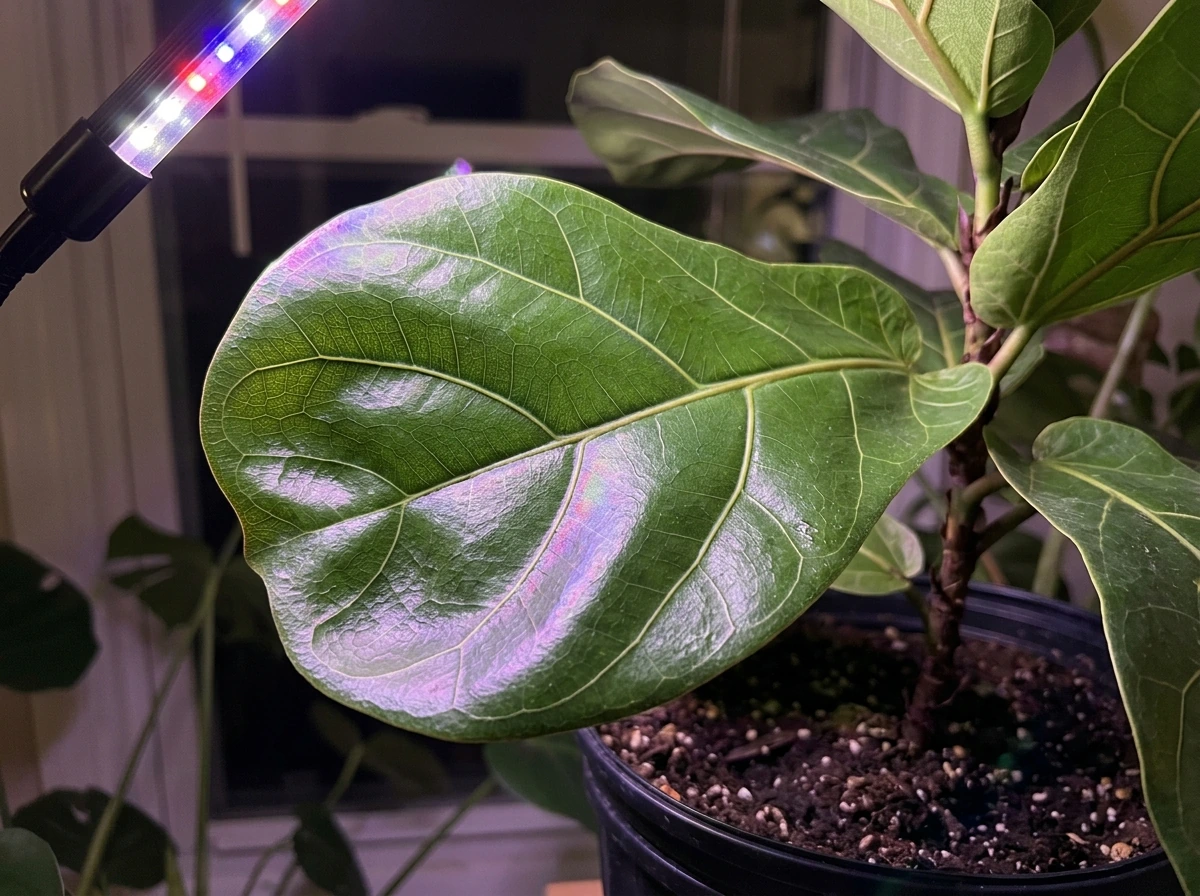
They do, when the right conditions are met. Plants grow by converting light energy into chemical energy through photosynthesis, and LEDs can deliver that light. The key phrase is "right conditions" because plants do not care about brightness the way your eyes do. They care about specific wavelengths of light, the intensity of those wavelengths hitting the leaf surface, and how many hours per day that light is available. Get those three things right with an LED, and your plants will grow just as well as they would under the sun or fluorescent tubes.
The science here is well established. Researchers and university extension programs measure light for plants using photosynthetic metrics, specifically PPFD (micromoles of photons per square meter per second) and DLI (daily light integral, which is the total photon dose a plant receives in a day). These are not the same as lumens, which measure brightness for human eyes. A lamp can look blazing bright to you and still be nearly useless to a plant if it is delivering the wrong wavelengths. That distinction is what separates a grow light from a regular bulb.
Grow lights vs regular LEDs: what actually changes
A regular LED bulb is designed to look good to human eyes. It outputs a lot of green light because our eyes are most sensitive to green, and it is engineered to a color temperature that makes rooms feel warm or cool. A purpose-built LED grow light is engineered around the wavelengths plants absorb most efficiently for photosynthesis, primarily red light in the 630 to 680 nanometer range and blue light in the 430 to 470 nanometer range. Many commercial grow lights are designed with roughly 80% red and 20% blue output (an R:B ratio of about 4:1) as a common starting point.
The practical difference is in how much usable light actually reaches your plant canopy per watt of electricity consumed. Grow lights are built to maximize photosynthetically active radiation (PAR), the band of light from 400 to 700 nm that plants actually use. Regular LEDs spread their output across wavelengths that are efficient for lighting a room, not for feeding a plant. This is why swapping in a grow light almost always produces noticeably better results than using a standard bulb at the same wattage and distance.
How LED light actually helps plants (the short science)
Photosynthesis happens inside chlorophyll, and chlorophyll has two main absorption peaks: one in the blue range (around 430 to 450 nm) and one in the red range (around 640 to 680 nm). Blue light drives compact, leafy vegetative growth and is especially important for seedlings and foliage plants. Red light is strongly linked to flowering, fruiting, and overall biomass production. When both are present in useful quantities, most plants thrive.
What about <a>white LED grow lights</a>? White LEDs create broad-spectrum output by combining red and blue LEDs with the addition of green, or by using a phosphor coating over blue LEDs to spread the spectrum. Research confirms that white or full-spectrum LEDs can support plant growth well, and many growers prefer them because they make it easier to spot plant health issues under the light. The key is whether the white LED is designed with enough PAR output, not just visible brightness.
Intensity matters just as much as spectrum. The University of Maine Extension provides PPFD targets that put most houseplants in the 100 to 400 micromoles per square meter per second range for vegetative growth, while flowering and fruiting plants can need 400 to 1,200 PPFD. Those numbers are what you are trying to hit at the leaf surface, and they are entirely achievable with the right LED at the right distance.
Will your specific LED type work? Bulbs, strips, lamps, and regular LEDs
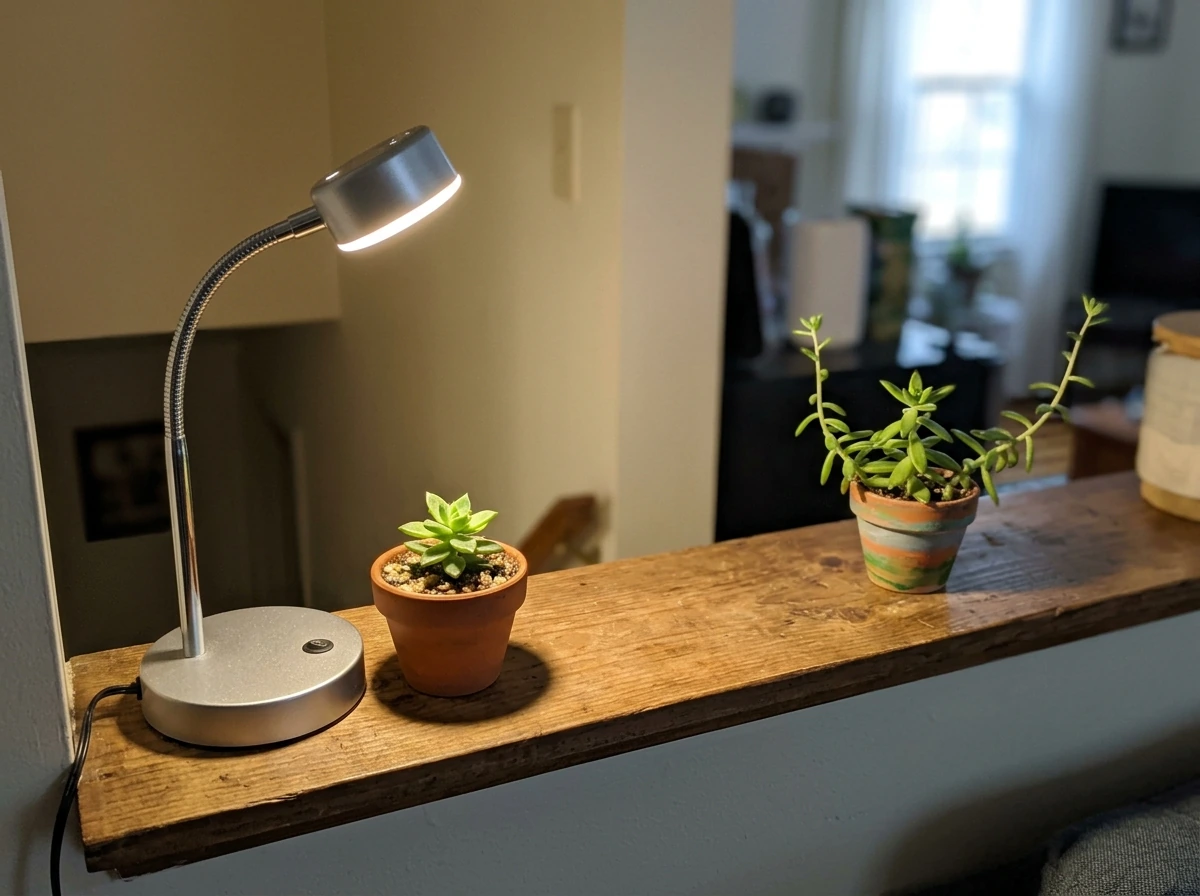
This is the question most people actually have, so here is a direct breakdown by product type.
Regular/normal household LED bulbs
A standard household LED bulb (the kind screwed into a lamp or ceiling fixture) will provide some benefit to low-light houseplants like pothos, snake plants, or ZZ plants if placed close enough. But for most plants, it will not deliver enough PAR intensity or the right spectrum for robust growth. You might keep a plant alive and looking acceptable, but you will not see the same growth rate or flowering you would get from a dedicated grow light. If regular LEDs are your only option, put the plant as close as safely possible, use a daylight-balanced (5000K to 6500K) bulb, and keep expectations modest.
LED lamps and desk lights
Same situation as bulbs. An LED desk lamp pointed at a plant may help low-light species, but the intensity drops off sharply as distance increases, which is a fundamental physics problem, not a brand issue. Even a decent LED lamp will struggle to maintain useful PPFD levels more than 12 to 18 inches from the plant canopy. For herbs, seedlings, or anything that needs real light energy, this setup is not enough on its own.
LED strip lights
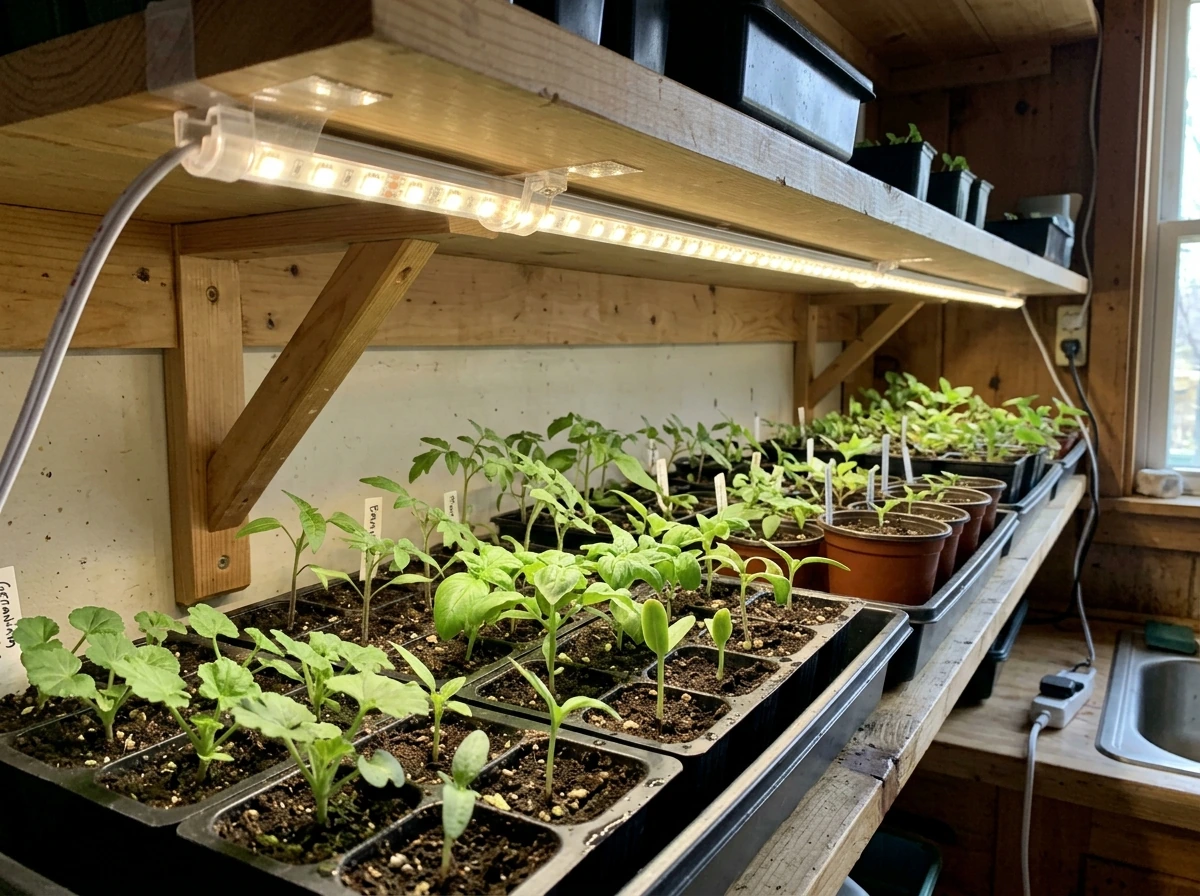
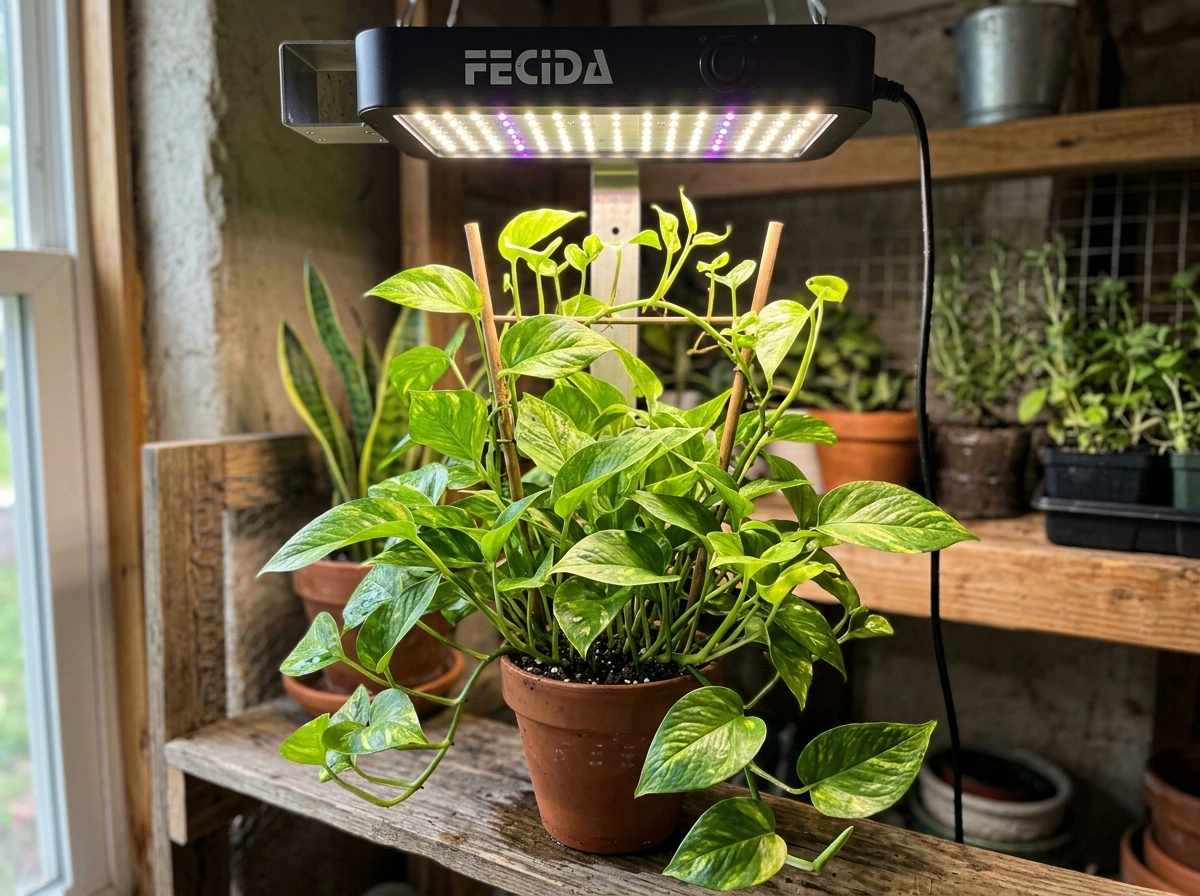
LED strip lights marketed for plants (often called "grow strips" and featuring red and blue LEDs) can work surprisingly well in enclosed spaces like shelving units or grow tents, where they can be placed very close to the canopy, typically 4 to 10 inches away. Standard decorative LED strips that emit white or warm-white light are less effective because they prioritize aesthetics over PAR output. If you are using strips, look for ones rated in PPFD or that specifically list red and blue wavelengths in the grow-relevant range.
Purpose-built LED grow lights (panels, bars, full-spectrum)
These are what actually work reliably. LED grow light panels, quantum board lights, and bar-style grow lights are engineered specifically to maximize PAR delivery across a defined coverage area. They come with specs you can actually use, like PPFD at a given distance and coverage area at a given height. When these specs match your plant's needs and you set them up correctly, results are consistent and measurable. This is the category worth investing in if you are serious about growing plants indoors.
| LED Type | Spectrum Quality for Plants | Typical PAR Output | Best Use Case |
|---|---|---|---|
| Regular household bulb | Poor to fair (too much green) | Low | Low-light survivors only |
| LED desk/floor lamp | Poor to fair | Low | Very low-light tolerant plants |
| Decorative LED strip | Poor (aesthetics-focused) | Very low | Not recommended for growth |
| Grow-rated LED strip | Good (red/blue focused) | Moderate (if close) | Shelving, microgreens, herbs |
| Full-spectrum LED grow light | Excellent | High | Most plants, all growth stages |
| LED grow panel / quantum board | Excellent | High to very high | Vegetables, fruiting plants, full grows |
How to set up LEDs for real plant growth
Getting results from an LED grow light is mostly about three things: distance from the canopy, daily hours of light, and making sure your light actually covers the plants. Get these right and you will see a clear difference within a few weeks.
Distance from the plant canopy
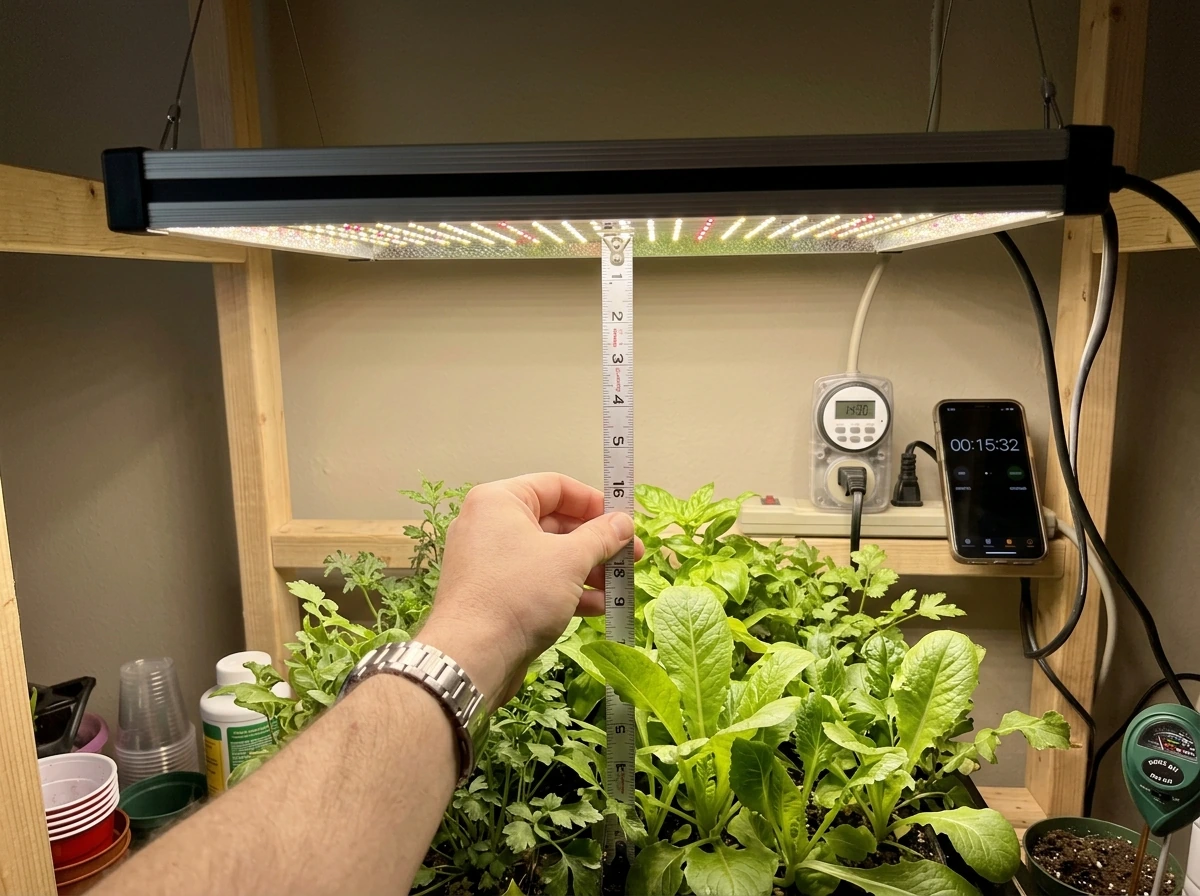
Light intensity drops off rapidly as you move away from the source. This is not a grow-light quirk, it is physics. Moving a light from 12 inches to 24 inches above a plant does not halve the intensity, it reduces it to about a quarter. Most LED grow light manufacturers provide a PPFD map showing intensity at different heights, and you should use it. As a general rule: seedlings and low-light plants do well at 18 to 24 inches from a mid-power grow light, while high-light plants like tomatoes or peppers may need the light as close as 12 to 18 inches. Household LEDs should be as close as possible without touching, often 6 to 12 inches. For the question of can led grow lights burn plants, distance and intensity matter a lot.
Daily light hours and using a timer
Most houseplants and vegetative crops need 14 to 16 hours of light per day under artificial lighting to compensate for the lower intensity compared to natural sunlight. Fruiting plants like tomatoes or peppers typically need 16 to 18 hours during production. Low-light houseplants can manage with 12 to 14 hours. The best thing you can do is buy an inexpensive outlet timer and set it once. Inconsistent photoperiods stress plants and slow growth, and you will forget to switch the light on and off manually. A timer is a $10 investment that pays off immediately.
Coverage area and light distribution
A single LED bulb or small fixture does not spread light evenly across a large tray of plants. Check the rated coverage area on a grow light before buying. Most quality LED panels will list something like "2x2 foot footprint at 18 inches" or similar. If your grow area is larger, you need more lights or a higher-wattage fixture. Gaps in coverage mean uneven growth, with plants near the edges growing slower and stretchier than those directly under the light.
What PPFD and DLI actually mean for your setup
PPFD is the intensity of usable light at a single moment, measured in micromoles per square meter per second (µmol/m²/s). DLI is the total amount of that light delivered over a full day. You can roughly calculate DLI by multiplying your PPFD by the hours of light per day and dividing by a constant (PPFD × hours × 3600 / 1,000,000). A foliage houseplant might need a DLI of around 6 to 12 mol/m²/day, while a fruiting vegetable might need 20 to 30 or more. You do not need to get obsessive about this math, but understanding that intensity and duration both matter helps you troubleshoot when something is not working.
What results to expect, and what to do when things go wrong
With a proper LED grow light at the right distance and duration, most houseplants show measurably faster growth within two to four weeks. Seedlings stay compact and sturdy instead of stretching toward the light. Herbs like basil and mint become noticeably bushier. Fruiting plants set flowers and actually produce, which they often refuse to do with inadequate light. Do not expect overnight miracles, but consistent, healthy growth is entirely achievable.
When the light is too dim or too far away
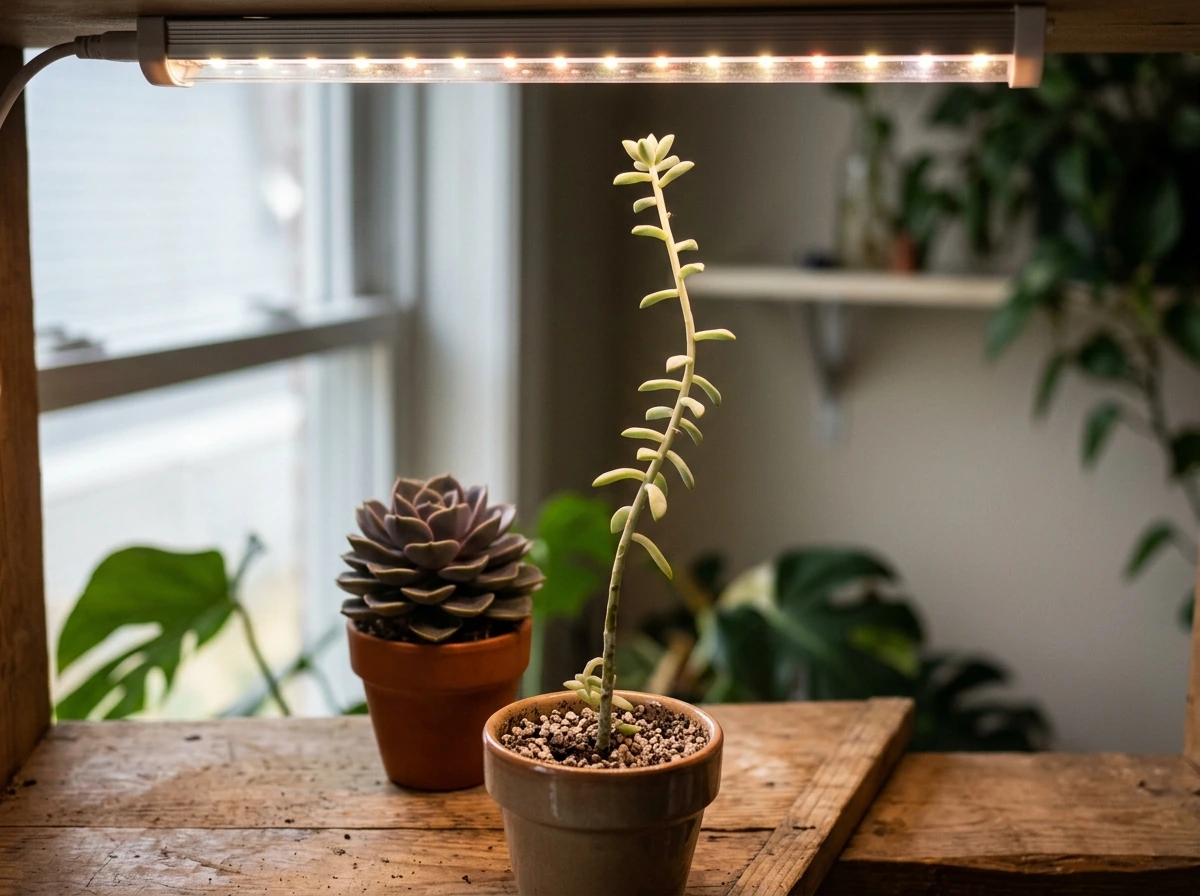
The most common failure mode is simply not enough light reaching the plant. Signs include leggy, stretched stems as the plant reaches toward the light source, smaller-than-normal leaves, pale or yellowing lower foliage, and little to no new growth. The fix is to move the light closer, upgrade to a higher-output fixture, or increase daily light hours. If you are using a household LED and seeing these symptoms, a dedicated grow light is almost certainly what you need.
Wrong spectrum
If your light is intense enough but your plant is not flowering when it should, or vegetative growth looks weak despite adequate intensity, spectrum may be the issue. Warm white bulbs (2700K to 3000K) lean heavily red and can push flowering in some plants but may produce leggy vegetative growth. Cool white bulbs (5000K to 6500K) are better for vegetative stages. A grow light with a balanced red/blue or full-spectrum output handles both stages well and removes most of the guesswork.
Too much light
Yes, too much is also a real problem. Excessive light intensity can cause photobleaching, where leaves turn pale yellow or white starting at the tips or the sections closest to the light. You might also see crispy leaf edges or sudden leaf drop. This typically happens when a high-powered grow light is placed too close to the canopy. The fix is simple: raise the light a few inches and watch for recovery over the next week or two. Most plants bounce back quickly once intensity is dialed back to the right range.
Insufficient daily hours
Even a good grow light will underperform if it is only on for 6 to 8 hours a day. Many people just turn the light on when they are in the room and off when they leave, which is not consistent or long enough. Indoor plants need to accumulate enough total photons per day (the DLI concept) to fuel meaningful growth. Running your light for 14 to 16 hours on a consistent schedule, with a timer, is the single easiest fix for slow or stalled growth.
Choosing the right LED and a quick shopping checklist
If you are buying a grow light today, skip the regular LED bulbs unless you are just trying to keep a low-light plant alive. For anything beyond that, a purpose-built LED grow light is worth the investment, and decent options start around $30 to $50 for small shelving setups and $80 to $150 for a proper 2x2 or 2x4 foot coverage area.
Here is what to look for on the specs or packaging before you buy:
- PPFD rating at a specific height (not just wattage or lumens): look for at least 200 to 400 µmol/m²/s for houseplants and herbs, 400 to 800+ for fruiting crops
- Coverage area listed at the height you plan to use it, not the maximum possible spread
- Spectrum information: full-spectrum or red/blue (R:B around 4:1) are both fine; avoid lights that only list color temperature in Kelvin with no PAR data
- A dimmer or adjustable output is a nice bonus, especially if you are growing seedlings and mature plants in the same space
- Timer compatibility (most plug-in outlet timers work fine with any LED grow light)
Once you have the light, the setup is straightforward. Start with the light at the higher end of the recommended distance range, run it for 14 to 16 hours using a timer, and observe your plants for the first two weeks. If they look pale or are stretching toward the light, lower it a couple of inches. If you see bleaching or crispy tips, raise it. Most setups dial in within a few small adjustments, and once they do, you can largely leave it alone and let the plants do their thing.
If you are curious about whether specific LED types like white LEDs, normal household bulbs, or strip lights can substitute for a grow light, those situations are worth exploring in more detail separately, since each type has its own trade-offs. But for most people asking whether LED lights will help plants grow: yes, they will, as long as you match the right type of LED to the job.
FAQ
Can I use my existing 2700K or 3000K LED bulb to get flowering and fruiting?
If you can only use a household bulb, choose one labeled as “daylight” (about 5000K to 6500K) and place it very close to the plant without contacting leaves. Still, expect slower growth than with a grow light because you will likely miss both the PAR intensity and the red/blue balance needed for robust results. For demanding plants (tomatoes, peppers, herbs), it is usually a short-term survival option, not a full solution.
What does “full spectrum” mean, and will any full-spectrum LED work for plants?
Yes, but only if you verify the fixture produces enough PAR at the canopy. “Full spectrum” marketing can mean different things, and some bulbs have broad visible light with weak PAR output. Look for specs that include PPFD, PAR, or at least a coverage footprint at a stated mounting height, then match the required PPFD for your plant stage (vegetative versus flowering/fruiting).
How can I tell whether my LED is too weak or too strong without special instruments?
Most indoor setups fail because intensity is too low at the leaf, not because the bulb lacks some magical wavelength. Use the manufacturer’s PPFD map or distance guidance, then measure results by observing growth: leggy stretching and small leaves suggest you need more PPFD (move closer, increase power, or shorten distance). If leaves bleach or crisp, you likely have too much intensity, so raise the light.
Why do some bright LED bulbs not work well for plants even if they have high lumens?
Don’t rely on lumens to judge plant performance. A high-lumen lamp can still deliver poor PAR if much of its output is in wavelengths plants use less efficiently. The practical check is to compare PPFD (or a PPFD map), or at minimum the stated grow coverage area and mounting height.
How often should I adjust the distance between the LED and the plant?
A timer helps with photoperiod, but most people also need consistency in light height and coverage. If you move the light up a lot as the plant grows, PPFD drops and performance changes. A simple approach is to start at the recommended distance, then adjust in small increments every week or two, keeping the canopy within the fixture’s effective PPFD range.
If growth is slow, is it better to run the lights longer or buy a stronger fixture?
If the plants are not getting enough total daily light, longer schedules help until you hit the plant’s needs. If you already run 14 to 16 hours and still see weak growth, it usually means your PPFD is low, not that the photoperiod is too short. In that case, move closer (within safe distance), increase fixture power, or add another light to improve coverage.
Is it really necessary to use a timer for indoor plant lighting?
Yes, because the best “hours per day” guidance assumes stable delivery. If your light is on only when you are home, plants can miss both duration and consistency, which can stunt growth or delay flowering. Use an outlet timer, and confirm it stays on schedule even during weekends so photoperiod does not swing.
What should I do if my plant starts turning pale or developing crispy edges?
If leaves are pale or have crispy tips near the top, that is often photobleaching from excessive intensity, even if the plant looks otherwise “happy.” Raise the fixture by a few inches, then recheck after about a week. If the plant is getting light but still looks weak, the opposite change (lowering or increasing intensity) is usually the better experiment.
Can one LED grow light be enough for a larger shelf if I just move plants around?
Yes, because the canopy has to be within the effective coverage footprint. If you put a “2x2” light over a “2x4” area, the edges will receive less PPFD and will grow slower and stretchier. The quick fix is to use multiple fixtures or choose a light sized for your footprint so coverage is even at your mounting height.
How far past 16 hours can I run my LED lights before it causes problems?
Most plants are fine with typical indoor schedules, but don’t jump to extreme runtimes to compensate for weak lights. If you are already near the article’s common ranges (roughly 12 to 16 hours for many houseplants and vegetative crops), and you see no improvement, adjust intensity or coverage rather than adding many more hours. Longer runtimes beyond what the plant needs can also increase stress and encourage undesirable growth patterns for some species.
Could my slow growth be from humidity or watering issues instead of the LED?
Humidity and airflow do not replace light, but they can affect how you interpret “light problems.” Poor airflow or overly wet conditions can lead to droop, fungal issues, or slowed growth that look like low-light symptoms. If you see consistent leggy growth plus pale leaves specifically where light is strongest, that points to light intensity. If problems are patchy or accompanied by disease signs, address airflow and watering in parallel.
Next Articles
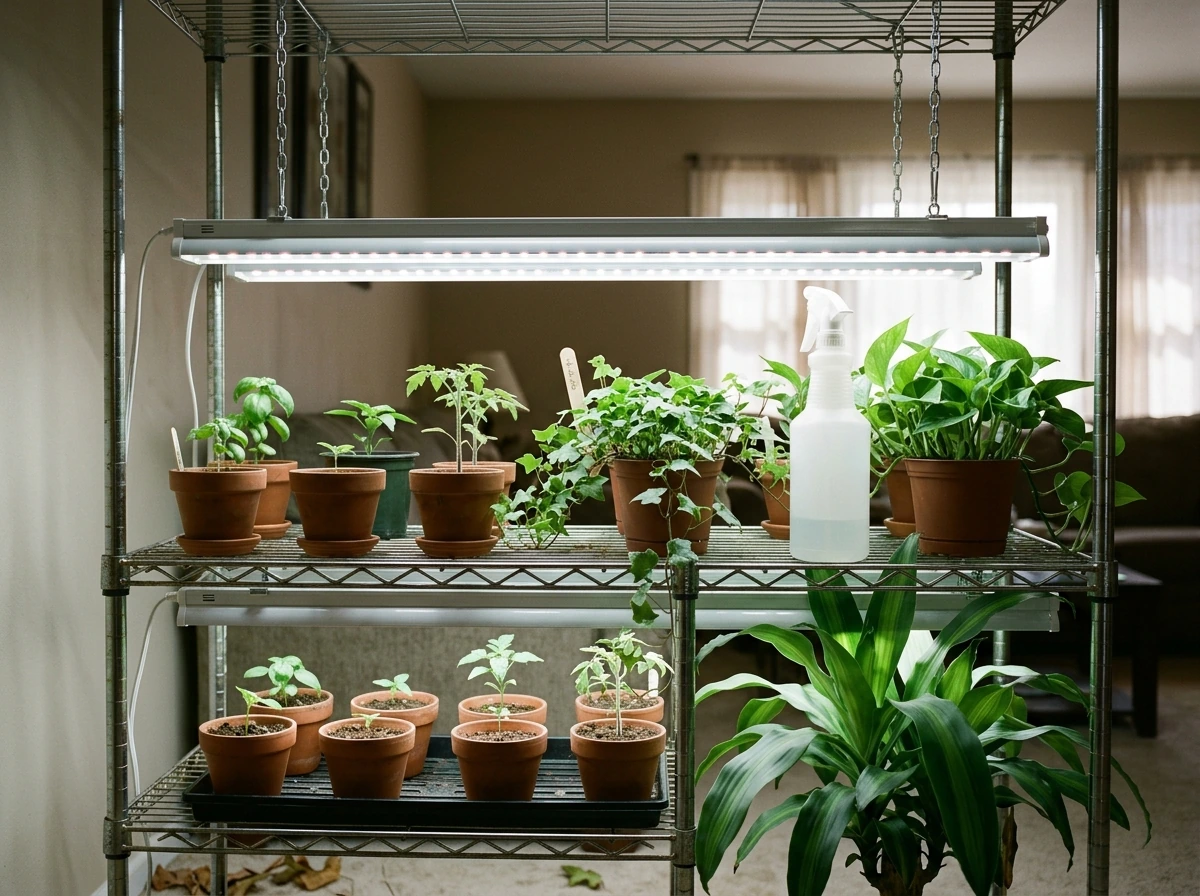
Can White LED Lights Grow Plants? Setup, Results, Fixes
How to use white LEDs for plant growth: spectrum limits, best settings, expected results, and troubleshooting fixes
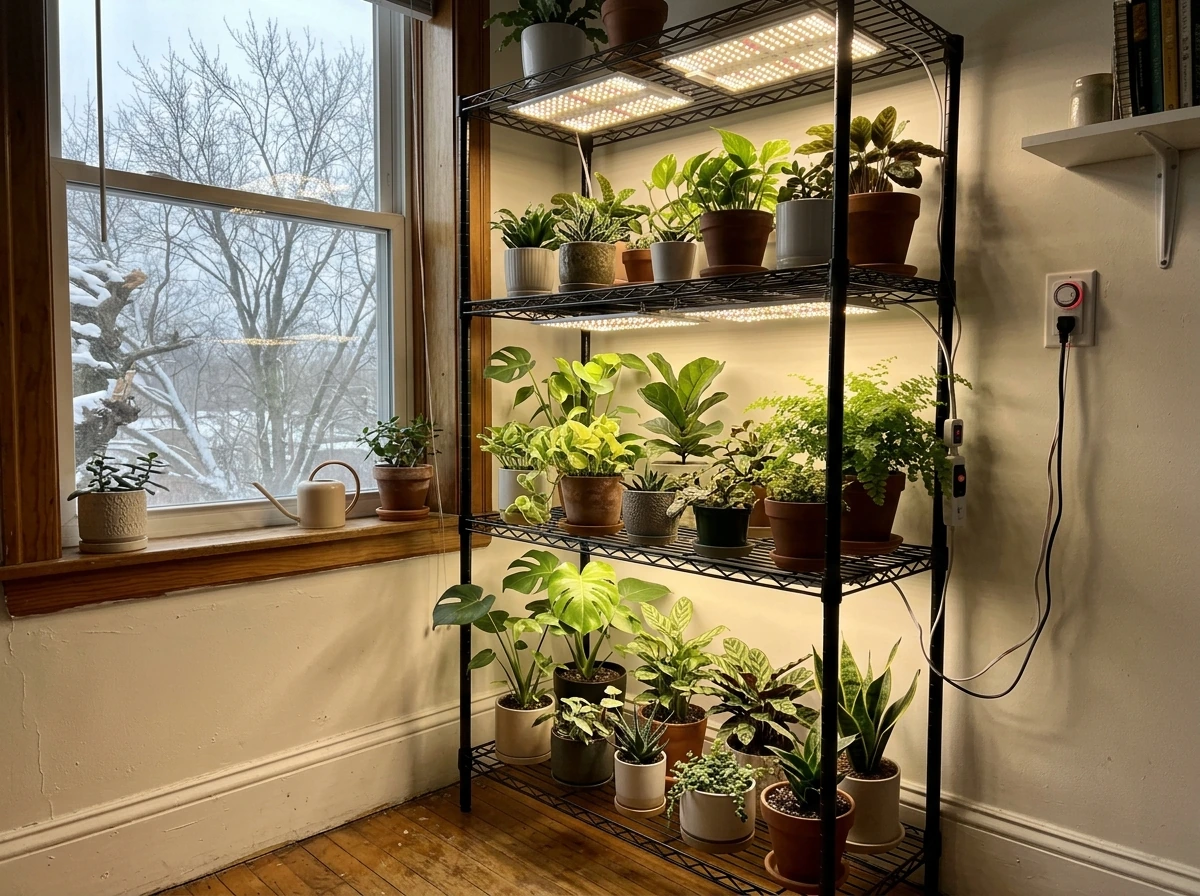
How Long to Leave Grow Lights On in Winter: A Guide
Set winter grow light runtime by plant type and lamp distance. Includes timer schedule, troubleshooting, and safety tips
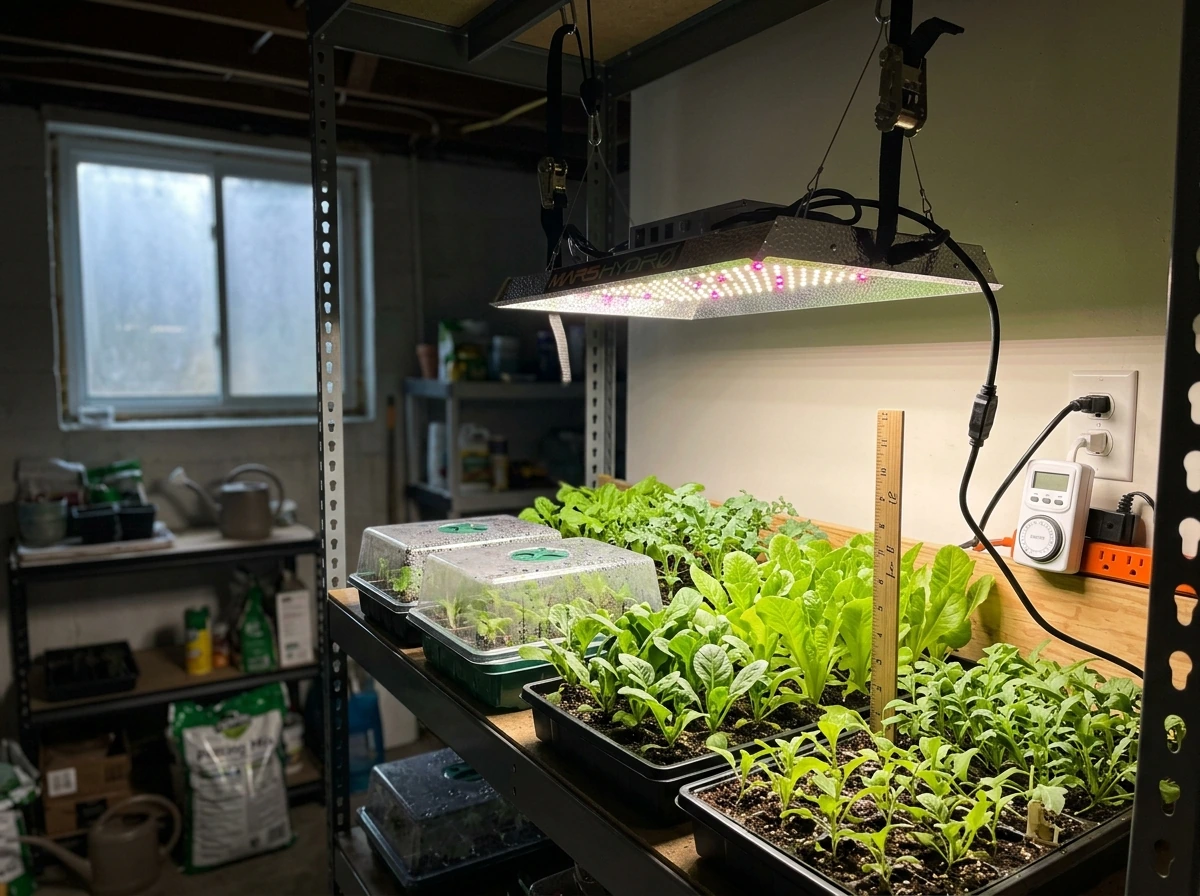
How Long Should Grow Lights Be On for Vegetables
Learn how many hours per day to run grow lights for vegetables, adjusted by crop stage, intensity, distance, and window