Yes, LED grow lights can burn plants, but probably not in the way you're imagining. It's not heat scorching a leaf like a magnifying glass in the sun. What actually happens is light stress: your plant's photosynthetic system gets overwhelmed by too much light energy, and the damage shows up as bleaching, pale or papery patches, and crispy edges. It's a real problem, and it's more common than most beginners expect, but it's also completely preventable once you understand what's going on.
Can LED Grow Lights Burn Plants? Causes, Prevention, Fixes
Marcus Holloway
24 Mar 2026
How plant burn from LED lights actually looks
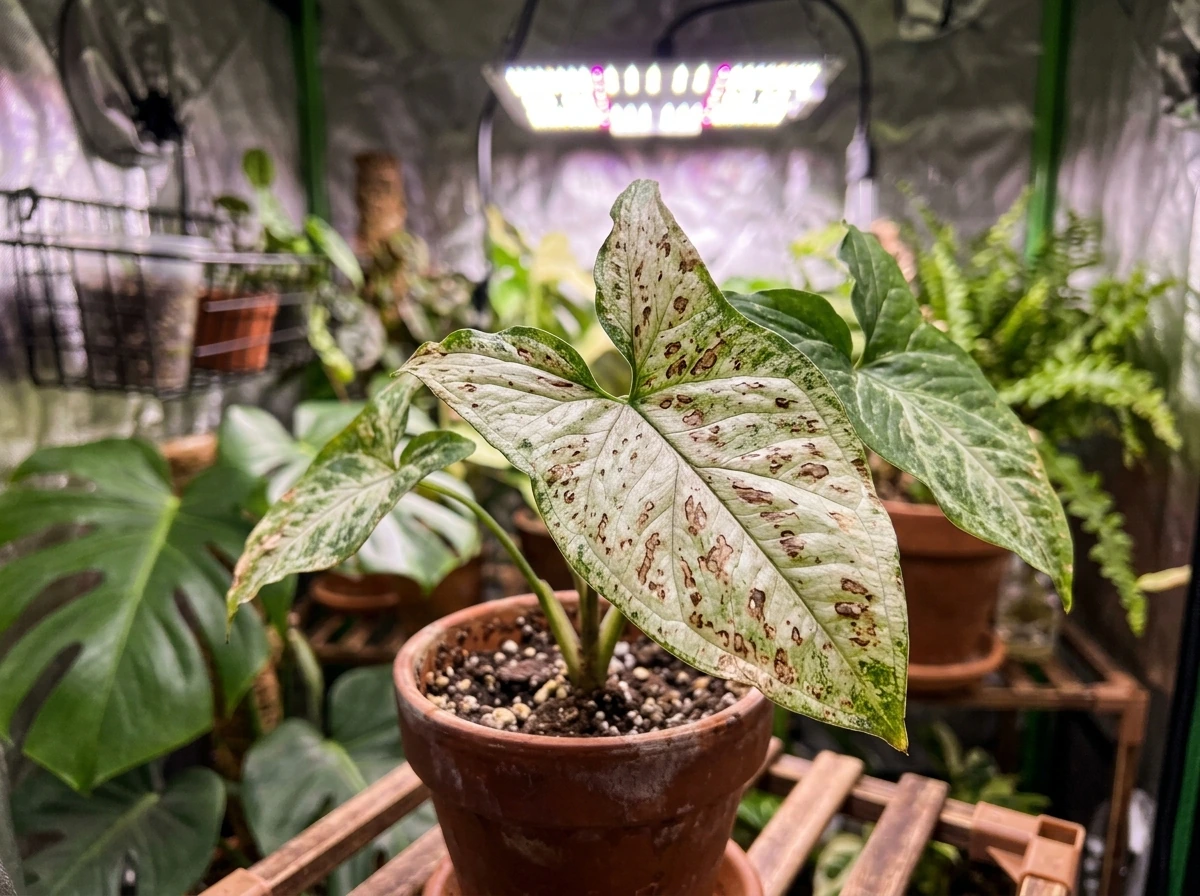
The first thing to know is that LED light damage doesn't look like a burn from a hot surface. You won't see brown scorch rings or the kind of wilting you'd expect from touching a hot bulb. Instead, what you're looking for is bleaching: leaves closest to the light turn pale, almost white or yellow-white, starting at the tips or the top surface that faces the fixture directly. The tissue looks washed out, like the color has been drained from it.
This happens because excess light energy destroys chlorophyll, the pigment that gives leaves their green color and drives photosynthesis. When a plant gets more light than it can process, reactive oxygen species build up inside the leaf cells and start damaging the photosynthetic machinery, including the pigments, proteins, and lipid membranes inside the chloroplasts. The result is visible bleaching and, if it goes on long enough, dead, papery tissue.
Here's what to look for specifically:
- Pale yellow or white patches on leaves closest to the light, especially at the canopy top
- Papery or crispy texture on affected tissue (not soft and wilted like overwatering)
- Damage concentrated on the side of the leaf facing the light, not uniform across the whole plant
- Newer growth at the top showing more damage than older leaves lower down
- Edges or tips turning tan or brown after the initial bleaching phase
One thing that trips people up: light bleaching from too much intensity looks superficially similar to nutrient deficiencies (especially iron or magnesium), which also cause yellowing. The key difference is location. Light bleaching starts at the top of the plant, on leaves directly under the fixture. Nutrient deficiencies typically start on older leaves lower on the plant. If your yellowing is at the crown and your light is hanging close, suspect light stress first.
When LEDs can damage plants
LEDs don't produce the radiant heat of HPS or fluorescent lights, so a lot of growers assume they're completely safe at any distance. That's the mistake. The issue isn't heat radiating off the bulb, it's the intensity of the light energy (measured as PPFD, or photosynthetic photon flux density, in micromoles per square meter per second) hitting the leaf surface. Get that number too high for your plant's tolerance, and you'll get photoinhibition: the photosynthetic process shuts down because it's overwhelmed.
Light intensity and distance
Distance is the biggest lever you have. Light intensity follows the inverse square law, meaning that if you double the distance between your light and your canopy, you get one quarter of the intensity, not half. Practically, this means a few inches of adjustment makes a huge difference. A light hanging 12 inches above seedlings can easily be pushing 600 to 900+ µmol/m²/s, which is far above what young plants need, A light hanging 12 inches above seedlings can easily be pushing 600 to 900+ µmol/m²/s, which is far above what young plants need, so [can white led lights grow plants](/household-bulbs-for-plants/can-white-led-lights-grow-plants) without causing stress? Seedlings and clones generally do best below 100 µmol/m²/s, while flowering and fruiting plants can handle 400 to 1,200 µmol/m²/s, depending on the species.
Spectrum
Spectrum matters too, though it's a secondary concern compared to intensity. A poorly balanced spectrum, heavy on blue for example, can increase the likelihood of photoinhibition at a given PPFD level compared to a full, balanced spectrum. This is one reason quality full-spectrum LED fixtures tend to be more forgiving than cheap blurple (red/blue only) lights run at high intensities. A balanced spectrum gives plants better tools to manage excess light energy through their natural photoprotective mechanisms.
Photoperiod: how long the lights are on
Even a moderate PPFD can cause cumulative light stress if the lights run too long. The relevant measurement here is DLI (daily light integral), which combines intensity and duration. A plant receiving a modest 300 µmol/m²/s for 20 hours a day is accumulating a very high DLI, potentially more than a shade-tolerant plant can handle. Most vegetative houseplants and herbs do well with a DLI somewhere between 10 and 30 mol/m²/day, and you reach the upper end of that range quickly if your timer isn't set correctly.
Poor acclimation
Plants aren't instantly ready for full intensity, even if that intensity is technically within their range. Moving a plant that was sitting on a windowsill directly under a 600 µmol/m²/s LED is like sending someone who hasn't exercised in months to run a marathon. The photosynthetic system needs time to upregulate its protective mechanisms. Jumping straight to full power is one of the most common ways new growers accidentally bleach their plants.
Heat vs. light stress: what's really happening
These two types of stress are related but different, and distinguishing them helps you fix the right problem. Heat stress happens when air temperature around the plant rises too high, typically above 85 to 90°F (29 to 32°C) for most common plants. Under heat stress, stomata close to prevent water loss, which also shuts down CO2 uptake and effectively stalls photosynthesis. Leaves may curl upward (sometimes called "taco-ing"), wilt during the heat of the day, and show brown scorching on edges, especially on the side closest to a heat source.
Light stress (photoinhibition/photobleaching) is driven by photon overload, not temperature. It can happen even when the room temperature is perfectly comfortable, because the damage is happening at the cellular level inside the leaf. The bleaching tends to be more uniform across the top of the canopy, affecting the leaves that face the light most directly.
In practice, you can have both at once, especially if your grow space has poor airflow. LEDs do produce some heat, and in a small tent or closet without ventilation, the air temperature near the canopy can climb even with an LED fixture. If your leaves are bleaching AND your thermometer reads above 85°F near the plant tops, you're dealing with a combination of both. Fix airflow first, then reassess the light distance.
| Symptom | More Likely Light Stress | More Likely Heat Stress |
|---|---|---|
| Leaf color change | White/pale bleaching at canopy top | Yellow-brown scorching on edges |
| Affected leaves | Newest growth closest to light | Outer edges, sun-facing sides |
| Texture | Papery, tissue dies and stays put | Wilting, then crisping |
| Time of day pattern | Persistent, not time-dependent | Worst during peak light hours |
| Room temperature | Normal (65–80°F) | High (85°F+) |
| Fix | Raise light, reduce hours | Improve airflow, lower temps |
How to prevent it: practical setup steps
Start with the right hanging height
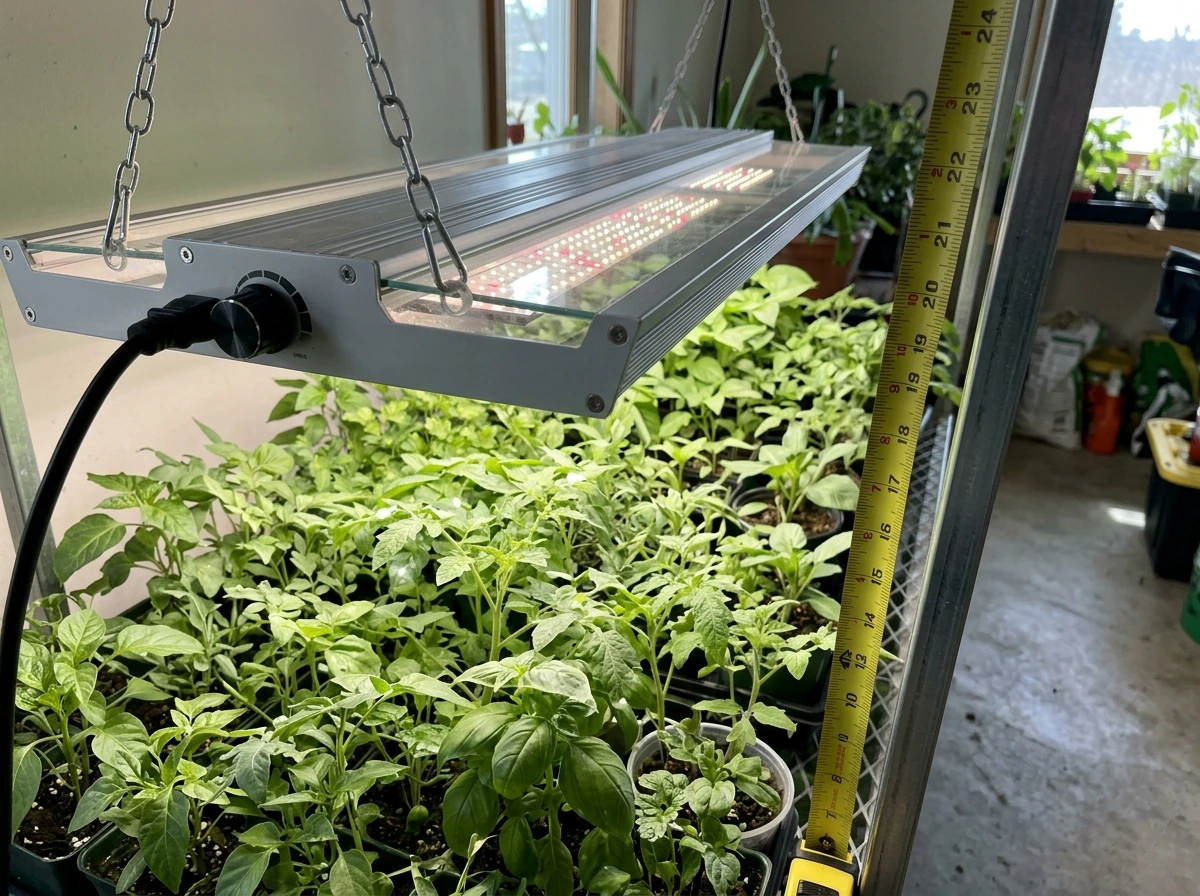
Your fixture's manual will usually give a recommended hanging height range, but those are starting points, not guarantees. The actual PPFD at canopy level depends on your specific fixture, the reflectivity of your grow space walls, and how many plants are sharing the footprint. As a rough starting point for most home LED grow lights: hang 24 to 36 inches above seedlings, and 18 to 24 inches above established vegetative plants. Adjust from there based on what you measure or observe.
Measure your actual PPFD
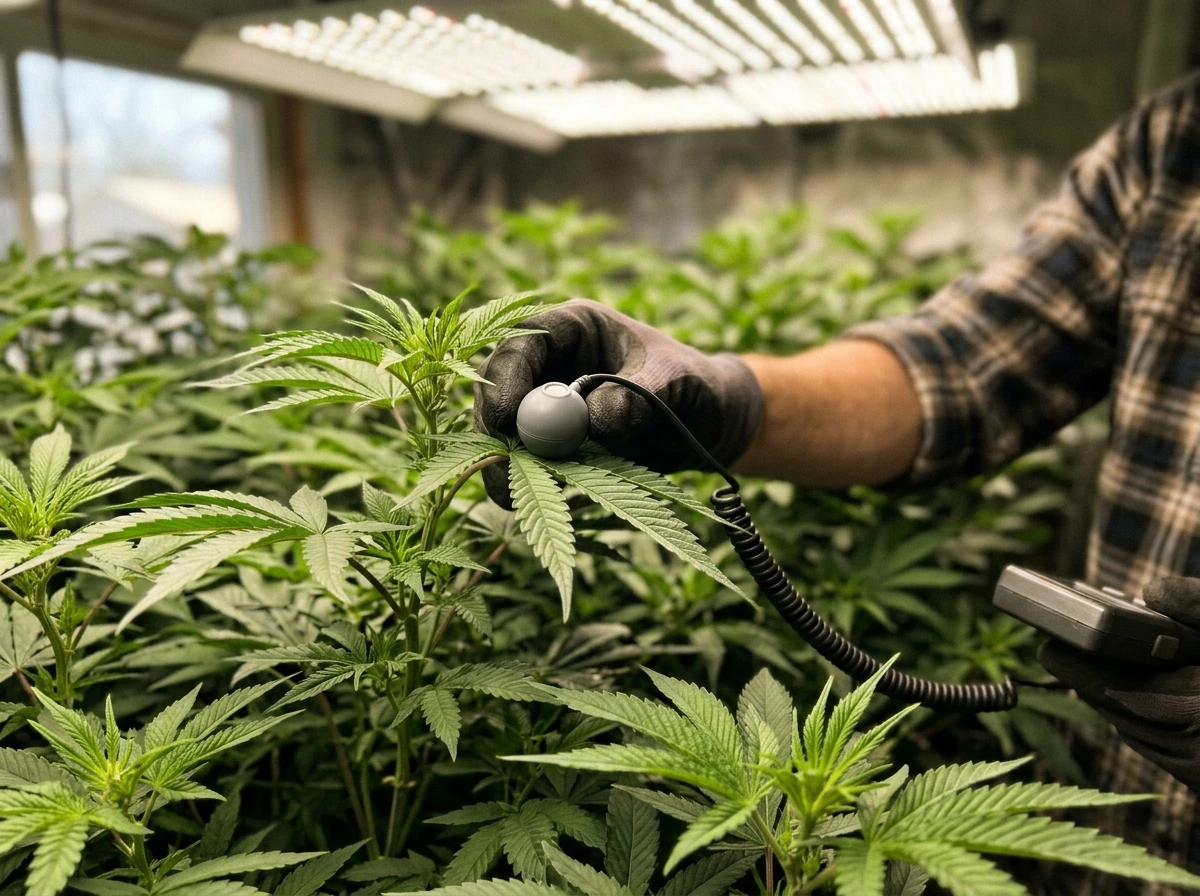
If you want to know what's actually hitting your plants, you need a PPFD reading at canopy level, not at the fixture. A dedicated quantum sensor like those from Apogee gives you the most accurate reading and is calibrated specifically for LED spectra. If you're not ready to spend that much, the Photone app on a smartphone gives a usable estimate (not perfectly precise, but good enough to catch obvious problems) and is a reasonable starting point for home growers. Hold the sensor or phone face-up at canopy height, pointed at the light.
Target PPFD ranges for common growth stages:
| Growth Stage / Plant Type | Target PPFD (µmol/m²/s) | Suggested Photoperiod | Approximate DLI (mol/m²/day) |
|---|---|---|---|
| Seedlings / Clones | 75–150 | 16–18 hours | 4–10 |
| Vegetative herbs / leafy greens | 150–300 | 14–16 hours | 8–17 |
| Vegetative houseplants (medium light) | 200–400 | 12–16 hours | 9–23 |
| Flowering / fruiting plants | 400–800 | 12–18 hours | 17–52 |
| High-light crops (tomatoes, peppers) | 600–1,200 | 12–16 hours | 26–69 |
Ramp up gradually
Don't start at full power. If your fixture has a dimmer, begin at 50 to 60 percent output, or start with the light higher than your target height and lower it over one to two weeks. Watch your plants daily during this period. If you see the top leaves beginning to pale or bleach, you've gone too fast. Give plants at least a week at each intensity level before increasing further.
Set a timer and stick to it
Running your lights 24/7 is one of the fastest ways to accumulate stress, even at moderate PPFD. Most plants benefit from a dark period. For general vegetative growth, 16 hours on and 8 hours off is a reliable starting point. For flowering plants that need short days to trigger blooming, 12 hours on and 12 hours off is standard. Use a mechanical or digital outlet timer so you're not relying on memory.
Keep air moving
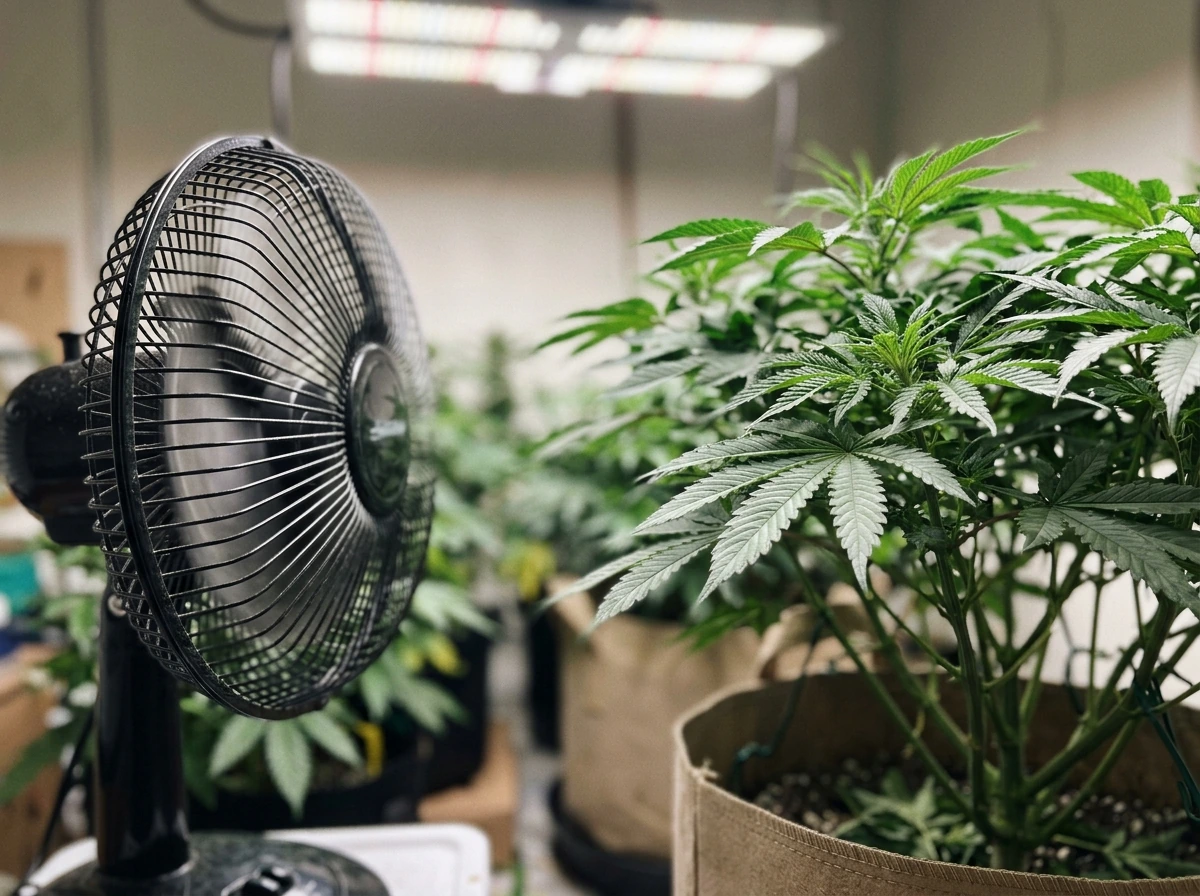
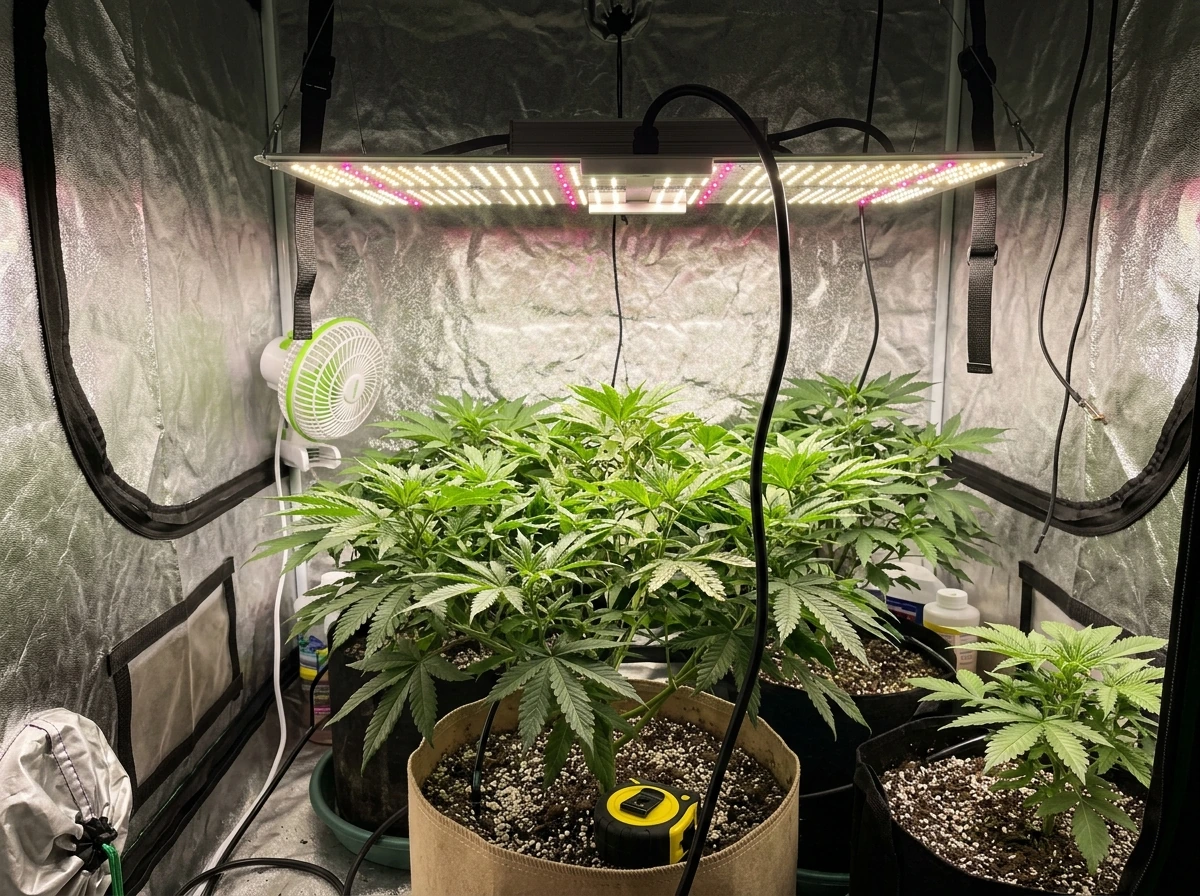
A small oscillating fan aimed at (not directly blasting) your canopy does two things: it prevents hot air from building up around the leaves, and it strengthens stems through gentle physical resistance. If you're growing in a tent or enclosed space, make sure you have both an intake and an exhaust, and that the exhaust is sized to replace the air volume every one to three minutes.
Troubleshooting scorched or bleached leaves
Confirm it's light-related first
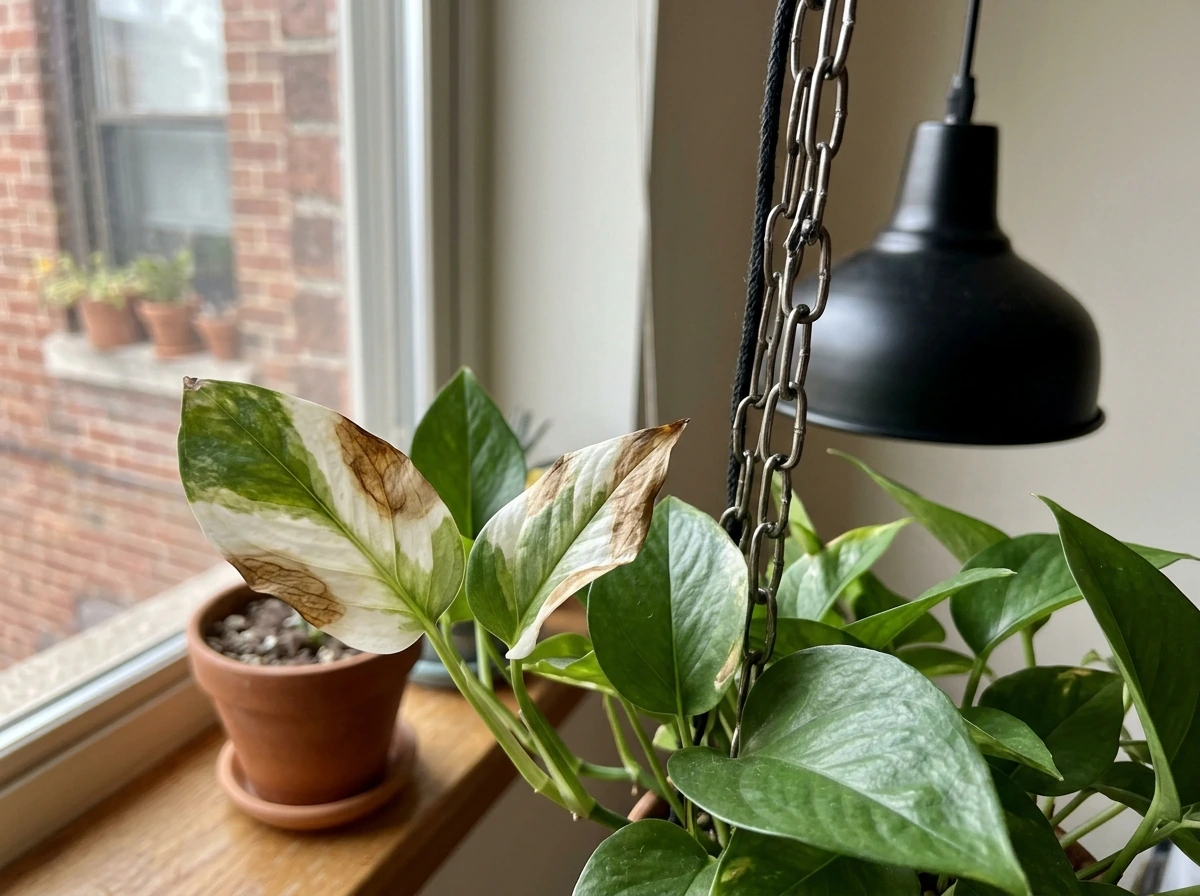
Before you move the light, rule out other causes. Check your watering schedule (overwatered plants wilt and yellow but usually starting from the bottom, not the top), look for pests on the undersides of leaves, and consider whether you recently changed fertilizer. If the damage is concentrated on the leaves directly facing the light, appeared after you adjusted your setup, and your PPFD or hanging height is outside the recommended range, light stress is the likely culprit.
What to do immediately
- Raise the light by 6 to 12 inches, or reduce dimmer output by 20 to 30 percent right now
- If your photoperiod is longer than 16 hours, cut it down to 14 to 16 hours for vegetative plants, or 12 for flowering ones
- Check the temperature at canopy height with a thermometer; if it's above 82°F, improve airflow before doing anything else
- Do not fertilize while the plant is stressed, it adds more demand on a system that's already struggling
- Water normally if the soil is dry, but don't overcompensate
Should you remove damaged leaves?
This depends on how bad the damage is. Leaves that are more than 50 percent bleached or dead are not going to recover and can be removed cleanly with sterilized scissors. They're just dead weight at that point. Leaves that are only partially affected (some bleaching but still mostly green) can stay. They won't un-bleach, but they can still photosynthesize on the healthy tissue, which helps the plant recover faster. Don't strip the plant bare trying to clean it up.
How long does recovery take?
New healthy growth is your signal that the plant is recovering. Most plants, if the stress wasn't severe and prolonged, will push new leaves within one to two weeks of correcting the light setup. The damaged leaves won't heal, but new growth should come in looking normal. If you're not seeing any new growth after two to three weeks and the plant continues to decline, reassess whether there's another stressor involved, like root problems or pests.
Quick checklist for safe LED grow light use today
If you're setting up or adjusting your grow light right now, here's what to actually do:
- Hang the light at the manufacturer's minimum recommended height, or higher, to start
- If your fixture has a dimmer, set it to 50 to 60 percent for the first week
- Set a timer: 16 hours on / 8 hours off for veg, 12/12 for flowering
- Measure PPFD at canopy height using a quantum meter or the Photone app; target under 200 µmol/m²/s for seedlings, 200 to 400 for established vegetative plants
- Place a small fan to keep air moving over the canopy without blasting the plants directly
- Check canopy temperature with a thermometer; keep it below 82°F at plant level
- Inspect the top leaves daily for the first two weeks: pale, papery, or bleached tissue means back the light off
- Increase intensity or lower the fixture by 2 to 3 inches per week only if plants look healthy
- Don't run lights 24/7, every plant benefits from a dark period
- If damage appears, raise the light and reduce hours immediately before troubleshooting anything else
LED grow lights are genuinely one of the best tools available for indoor gardening, and the risk of burning your plants is easy to manage once you know what to watch for. The setup takes maybe 20 minutes and a cheap thermometer. Spend that time up front and you'll almost certainly avoid the problems that trip up most beginners.
FAQ
Can LED grow lights burn plants at low temperatures, without heat stress?
Yes. If the fixture is too close or too intense for the species, seedlings and clones can show bleaching even though LEDs run cooler than HPS. A common mistake is starting at full power because “the light looks soft,” then increasing too fast over a few days. For early stages, aim for a low PPFD and ramp up gradually using either dimmer control or by raising the light.
How do I tell if yellowing is from too much light versus nutrient deficiency?
If it’s true light stress, you should see the most damage on the leaves closest to and most directly facing the fixture, often starting at the top canopy and leaf tips. Nutrient issues usually show more on older leaves first and can be more patchy across the plant. Also check whether the timing lines up with a light-distance or intensity change.
Should I measure PPFD at the fixture or at the plant canopy?
Use PPFD at canopy level, not at the fixture. The hanging height you choose can look “right” visually, but reflectivity, number of plants in the footprint, and your fixture’s beam pattern can change the actual intensity. If you measure at the fixture outlet, you can easily misjudge by a large margin and still get photoinhibition.
If my LED caused bleaching, will the leaves turn green again after I lower the light?
Usually not instantly. A plant can bleach while the room feels fine, and then recovery lags because chlorophyll is damaged tissue. What you want to see is new growth that comes in normal, typically within 1 to 2 weeks after you correct the setup. Don’t expect bleached leaves to green back up.
Is it enough to choose a high-lumen LED to grow plants safely?
Not safely. “Higher lumens” or “brighter by eye” are not reliable because LEDs differ in spectrum and beam spread, and plant stress depends on photon intensity (PPFD) and duration (DLI). Two lights with similar brightness can produce very different PPFD at the canopy, leading to overexposure.
Can running LED grow lights for too many hours cause burning even if the light isn’t too close?
Timers are critical because DLI can push a plant into cumulative stress even if the PPFD seems moderate. If you left the lights on for longer than your intended photoperiod, symptoms can show up later rather than immediately. Verify both the timer settings and whether you accidentally changed from, for example, 16/8 to 24/7.
Can airflow problems make LED light stress worse?
Yes, especially in small tents or closets where heat and humidity layers build up around the canopy. Even if LEDs are not a “radiant heater” like some older lighting, limited airflow can raise the air temperature enough to add heat stress on top of light stress. If you see bleaching plus a temperature reading above typical comfort levels, improve airflow first.
Why do my plants bleach after I move them from a window to the LED?
A sudden move down from a windowsill or a too-bright setting can overwhelm the plant’s protective response, even if the target PPFD would be acceptable long-term. Ramp up by lowering intensity or keeping the light farther away for several days, then step up slowly while watching for pale or papery patches.
Should I remove leaves that got bleached by my LED?
In most cases, partially bleached leaves can stay if they still have some green tissue, because remaining chlorophyll can support recovery. Completely dead, more than about half brown or papery tissue is unlikely to recover and can be removed to reduce clutter. The key is not to strip leaves aggressively, which can delay recovery.
What if I lowered the light and the plant keeps getting worse?
If the plant is continuing to decline and you are not seeing new normal growth after 2 to 3 weeks, assume light stress may not be the only factor. Common follow-ons include root issues, pests, watering problems, or fertilizer imbalance that either coincided with your light changes or became more obvious afterward. Recheck the full grow setup before concluding the light was the sole cause.
Next Articles
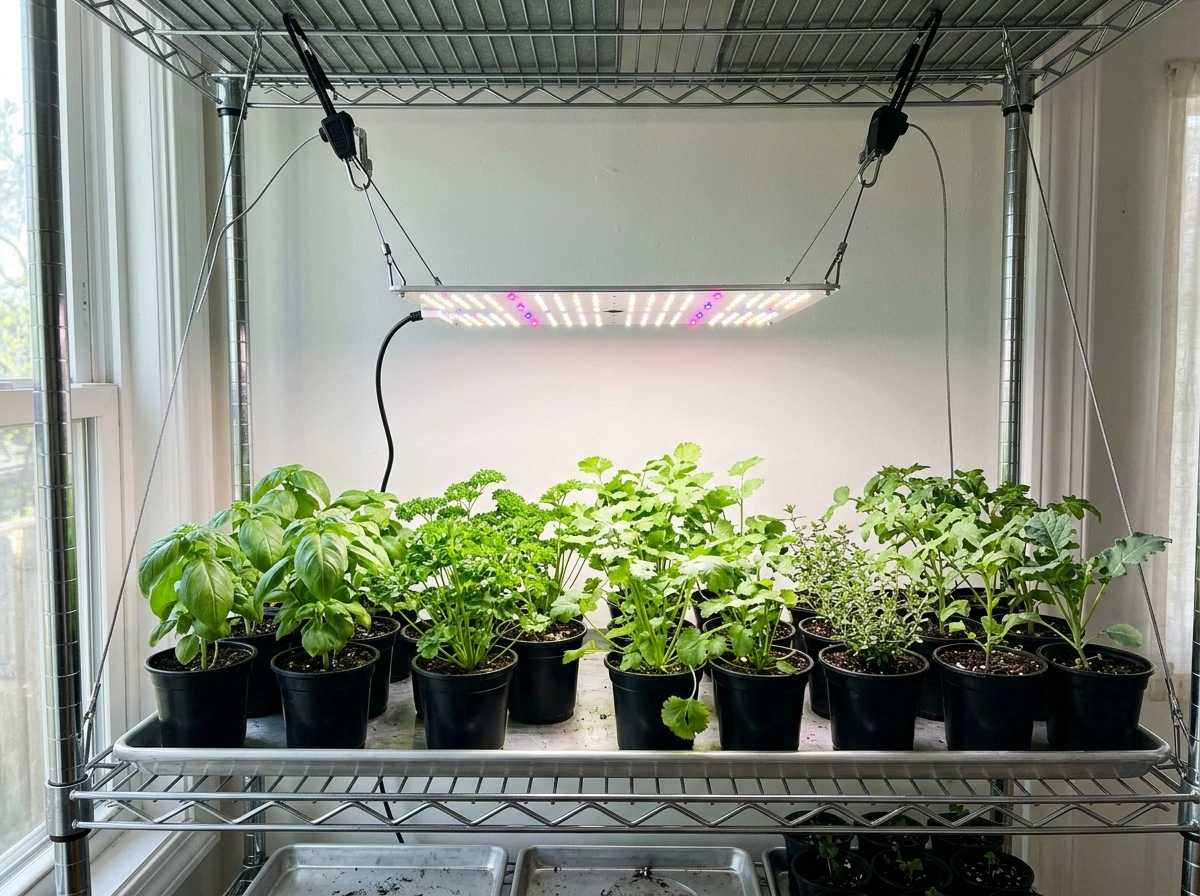
Do LED Lights Grow Plants? How to Set Up for Growth
Yes, LED lights can grow plants if the spectrum and intensity fit; learn setup, distance, timing, and troubleshooting.
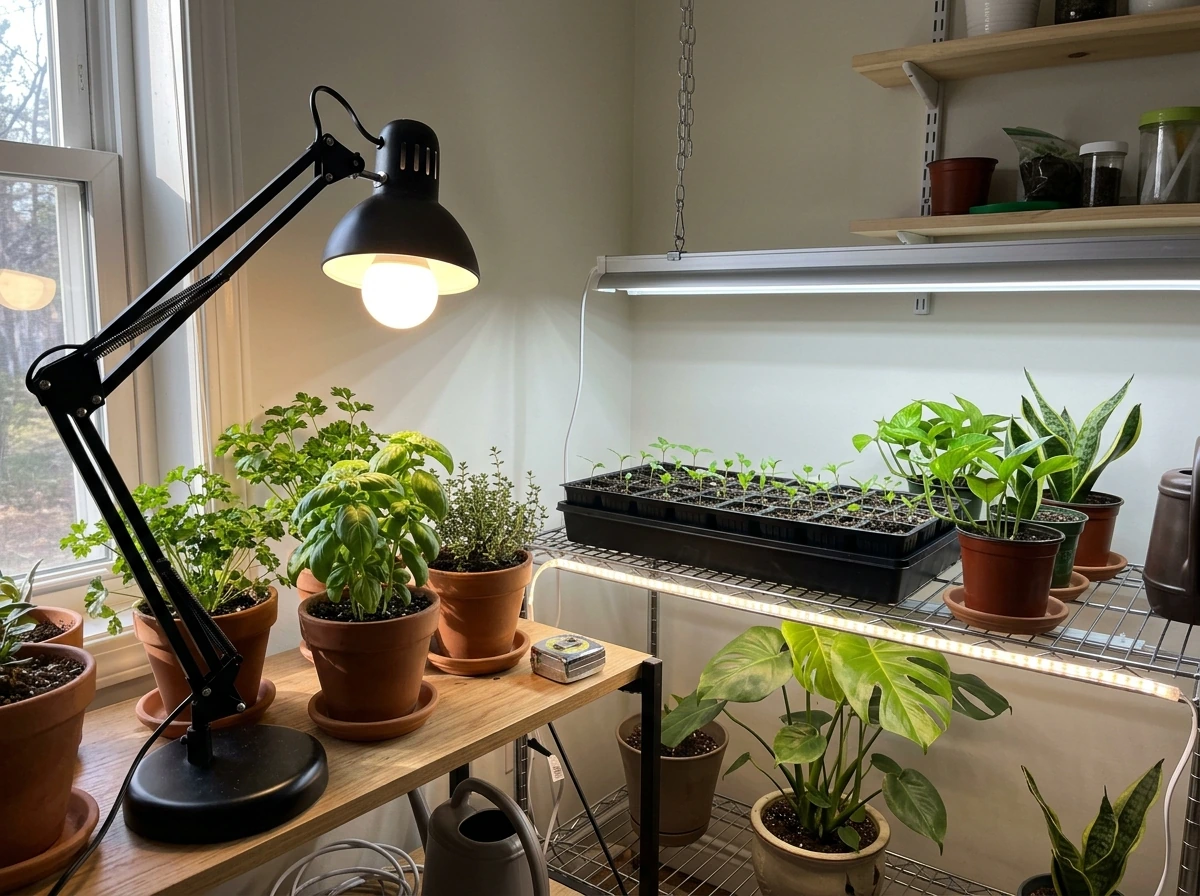
Can I Use Normal LED Lights to Grow Plants Indoors?
Yes, some normal LEDs can grow plants indoors, but results depend on spectrum, intensity, distance, and timing, not the
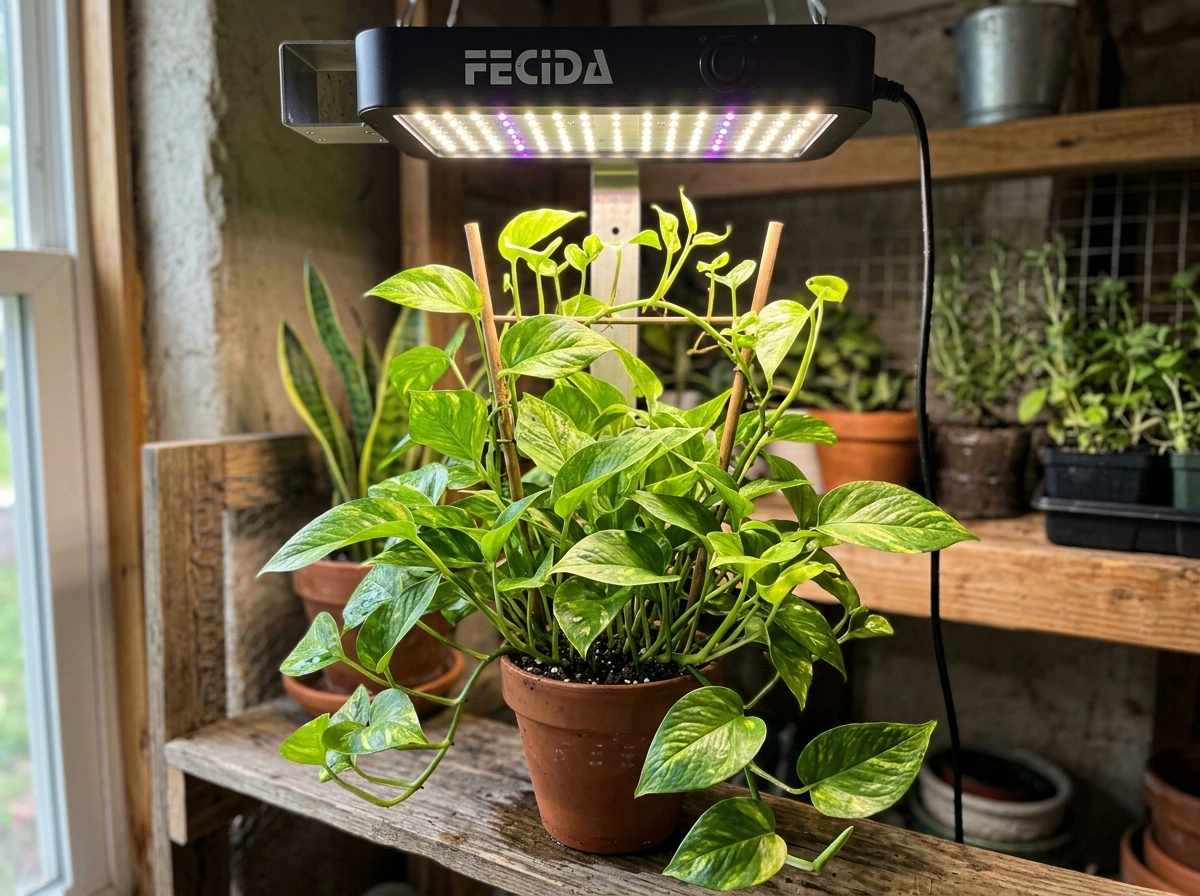
Will LED Lights Help Plants Grow? A Practical Guide
Learn how LED lights aid plant growth, what spectra and PPFD to target, and how to set distance and hours for results.