Yes, LED lights can absolutely grow plants. I've done it myself with everything from herb seedlings on a kitchen shelf to tomato starts in a basement with zero natural light. But here's the honest answer: not all LEDs are equal, and the type you use matters a lot. A dedicated LED grow light will almost always outperform a regular LED bulb for plant growth, but regular LEDs can work in the right situation. The key is understanding what plants actually need from light, and then matching your setup to that.
Do LED Lights Grow Plants? How to Set Up for Growth
Marcus Holloway
24 Mar 2026
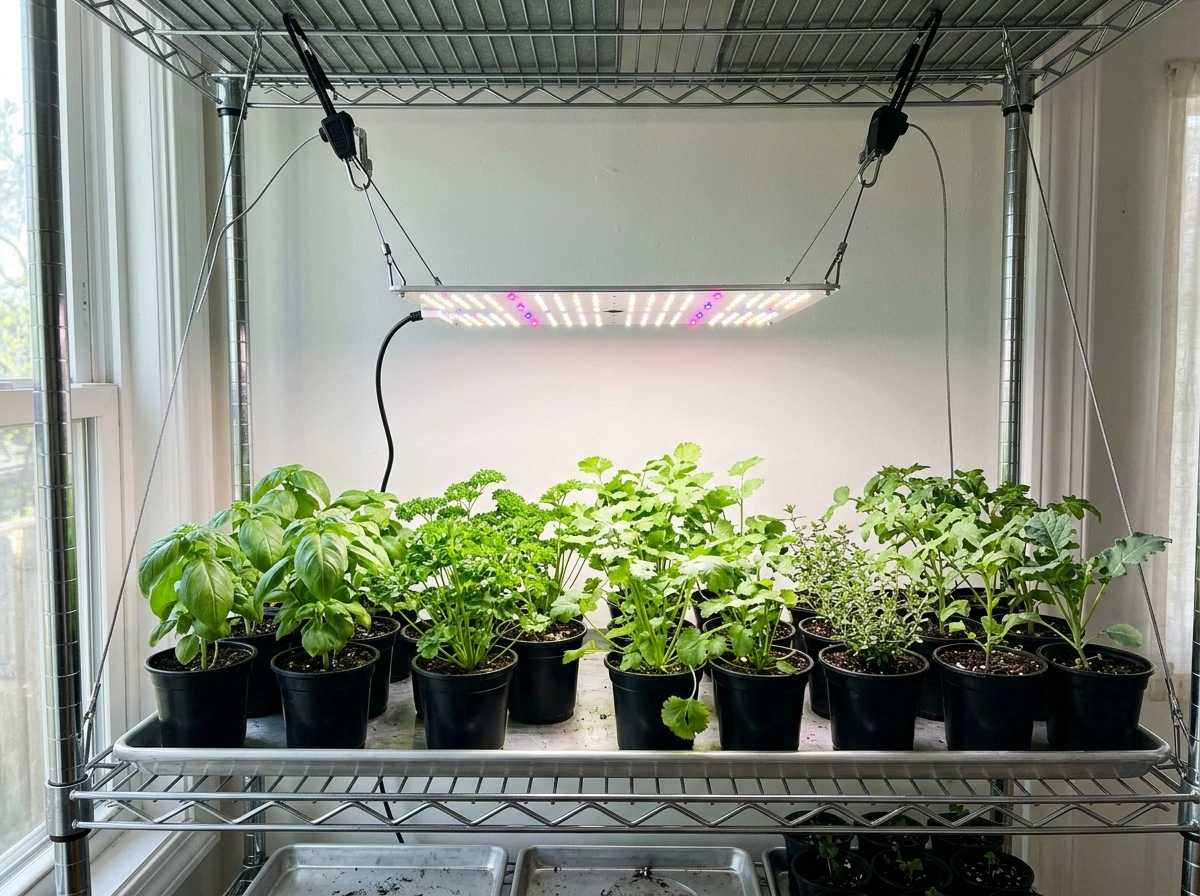
Yes, LEDs can grow plants. Here's why.
Plants grow through photosynthesis, which is driven by light. Specifically, they absorb light energy and use it to convert carbon dioxide and water into sugars that fuel growth. What matters is not just brightness in the way humans perceive it, but the specific wavelengths of light and how much of that light energy actually reaches the leaves. LEDs can deliver both, which is exactly why NASA has been using LED technology in plant growth research for decades. Their Astroculture program identified that plants respond most strongly to blue and red wavelengths, and LEDs can be tuned to deliver precisely those bands. So the technology itself is more than capable of growing plants.
The real question is not whether LEDs can grow plants, but whether the specific LED you own or plan to buy delivers the right spectrum and enough intensity for your plants to thrive. That distinction is what separates a successful indoor garden from a shelf full of sad, leggy seedlings.
Regular LED vs. grow LED: what actually makes them different
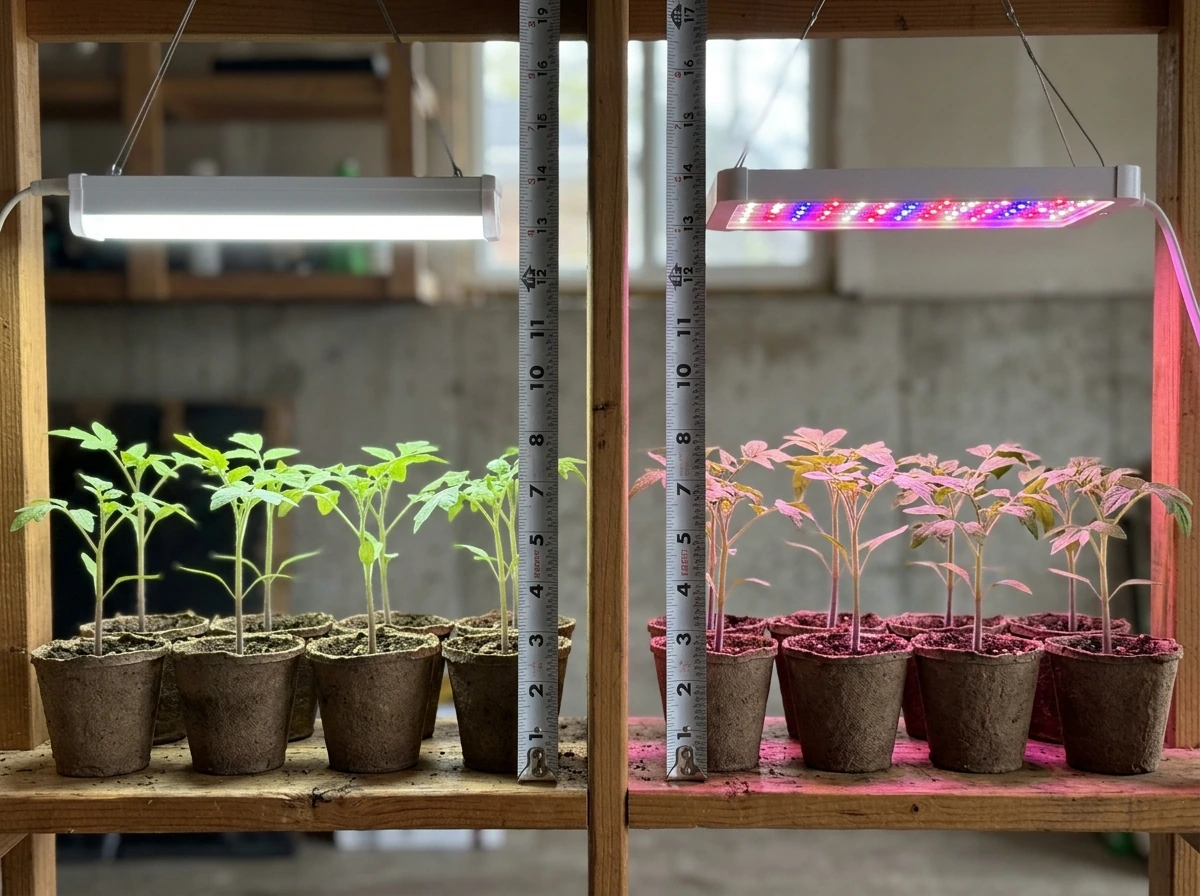
This is where most people get confused, so let me be direct. A regular LED bulb or LED shop light is designed to make a room look bright and comfortable to human eyes. Human vision is most sensitive to green and yellow light, so these bulbs are optimized to produce a lot of that. Plants, on the other hand, care most about red and blue wavelengths. A can white led lights grow plants regular warm-white or cool-white LED does include some red and blue, but most of its output is in the middle of the spectrum where plants get relatively little benefit.
LED grow lights are specifically engineered to shift that output toward the wavelengths plants actually use. Many have a visible pinkish-purple glow because they are heavy on red and blue and light on green. Some newer full-spectrum grow lights use a broader white spectrum that includes strong red and blue components, which works well and is easier to live with visually. Either way, the plant gets more usable light per watt compared to a standard household LED.
LED shop lights occupy a middle ground. A 4-foot T8-style LED shop light running at 40 watts puts out a decent amount of light, and many indoor gardeners use them for seedlings and low-light houseplants with reasonable results. They are cheap, easy to hang, and cover a wide area. The trade-off is that their spectrum is not optimized for plants, so you typically need to run them closer to the plant canopy and for longer hours to compensate. They are a legitimate option, just not the most efficient one.
| Light Type | Spectrum for Plants | Intensity | Best Use | Cost |
|---|---|---|---|---|
| Regular LED bulb | Low (optimized for human vision) | Low to moderate | Low-light houseplants, supplemental light | Very low |
| LED shop light (T8 style) | Moderate (some usable red/blue) | Moderate | Seedlings, herbs, low-light plants | Low |
| LED grow light (blurple) | High (red/blue focused) | Moderate to high | Seedlings, herbs, vegetables | Moderate |
| Full-spectrum LED grow light | Very high (broad, plant-optimized) | High | All plants, fruiting crops, full-cycle growing | Moderate to high |
My honest recommendation: if you are growing anything more demanding than low-light houseplants, spend the extra money on a proper LED grow light. The difference in results is real, and a decent grow light does not have to be expensive. There are solid panels available for under $50 that will handle herbs, greens, and seedlings without issue.
How LED grow lights actually work for plants
Spectrum: the wavelengths that matter
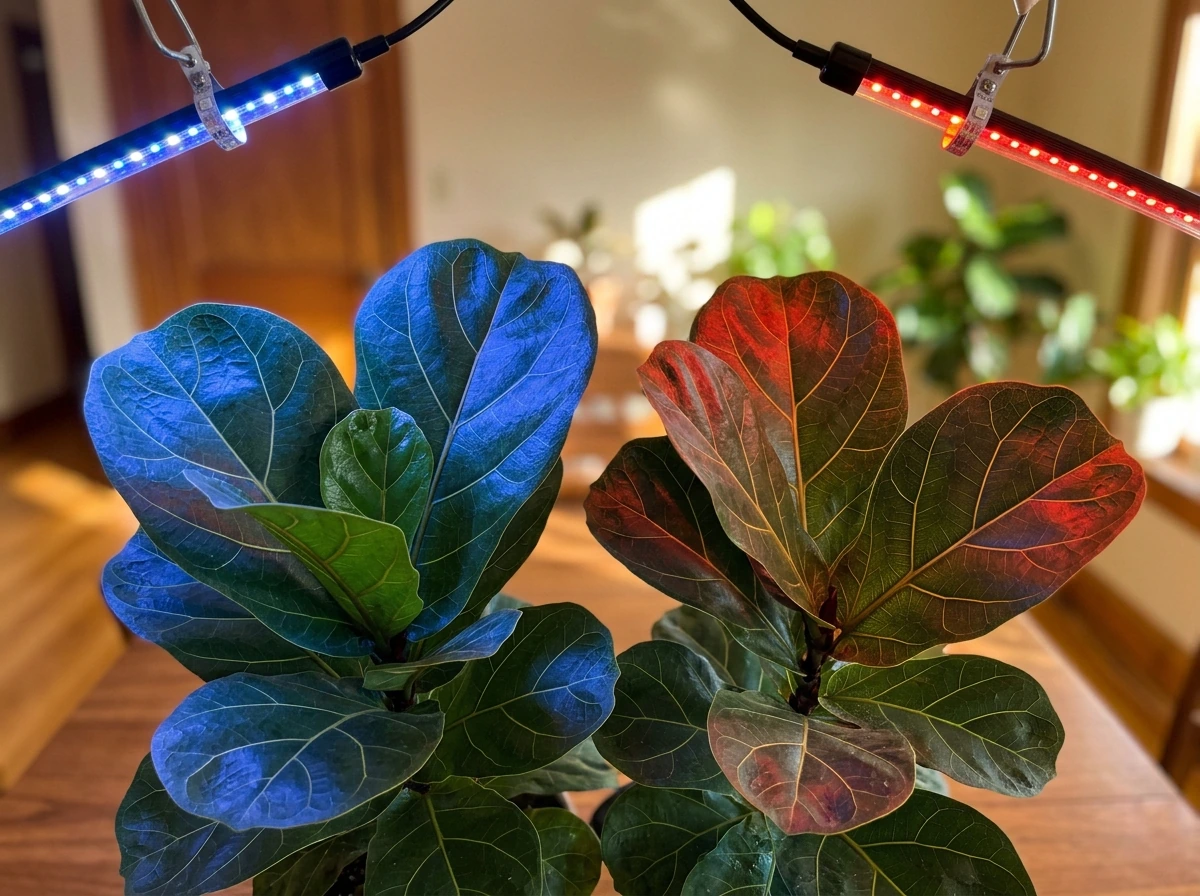
Plants absorb light primarily through chlorophyll, which has two main absorption peaks. Blue light, roughly 400 to 500 nanometers, drives vegetative growth, compact structure, and strong root development. Red light, roughly 600 to 700 nanometers, is the powerhouse for photosynthesis efficiency and is critical for flowering and fruiting. NASA research on sole-source lighting specifically identified broad-band red in the 600 to 700 nm range as having the highest quantum efficacy for photosynthetic effectiveness, meaning plants get the most growth benefit per photon of light in that range. A good grow LED delivers plenty of both.
Green light (the middle of the spectrum) is mostly reflected by leaves, which is why plants look green to us. It is not useless, some green light does penetrate deeper into a dense canopy, but it is far less efficient than red and blue. This is why a grow light that looks weird and purple is not broken. It is just doing exactly what it should.
Intensity: how much light is enough
Intensity is measured in PPFD (photosynthetic photon flux density), which counts the number of usable light photons hitting a square meter per second. Think of it like rainfall measured in millimeters rather than just whether it is raining. For low-light plants like pothos or peace lilies, you need roughly 50 to 150 PPFD. Herbs and leafy greens do well at 200 to 400 PPFD. Fruiting plants like tomatoes and peppers need 400 to 600 PPFD or more to produce well. Most budget LED grow lights do not always tell you their PPFD at a given distance, so a good rule of thumb is: if the light seems bright enough to make you squint a little when you look toward the canopy area, it is in a useful range. If it looks dim, it probably is.
Distance: closer is not always better
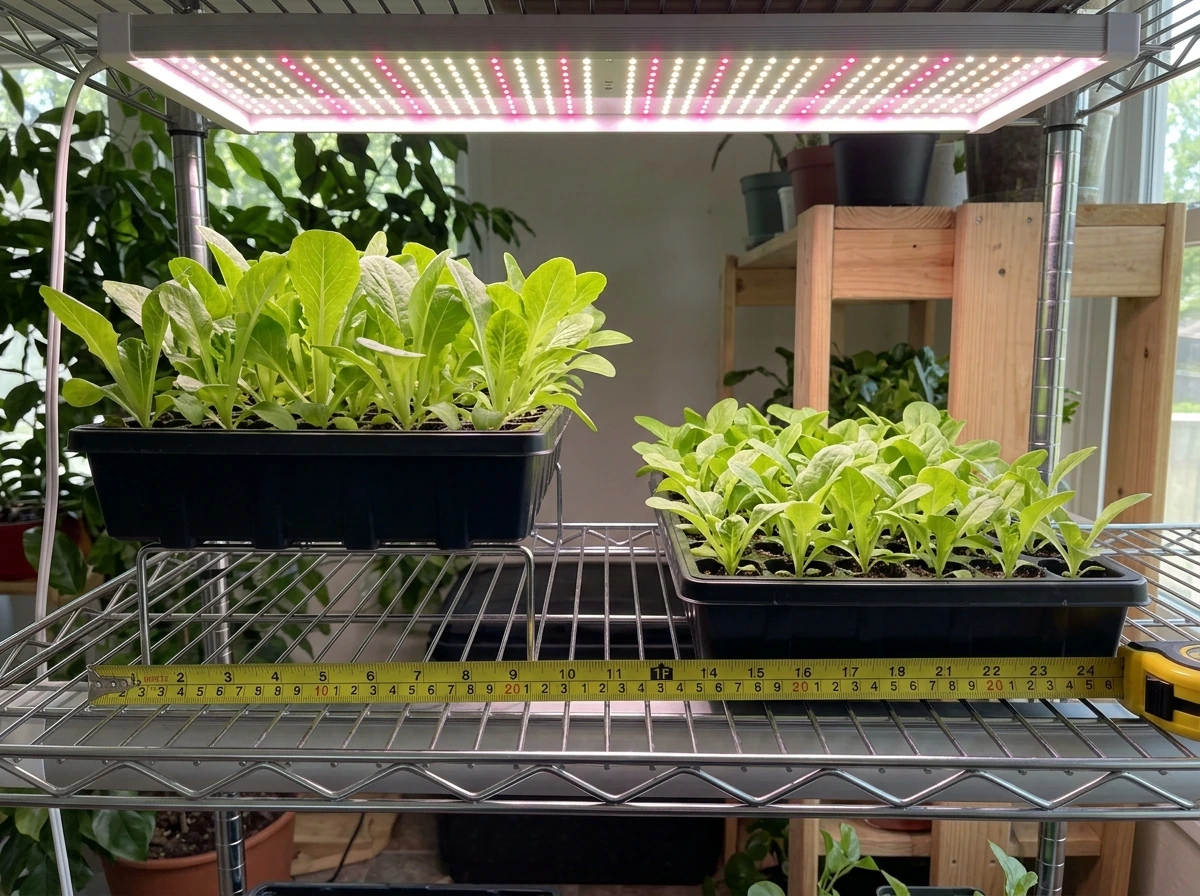
Light intensity drops off fast as you move the fixture away from the plant. This is not a linear relationship. Doubling the distance cuts intensity to roughly a quarter of what it was. On the flip side, getting the light too close can stress or even bleach leaves, especially with higher-powered LEDs. Most LED grow lights work well at 12 to 24 inches above the canopy for medium-intensity growing. Seedlings are often started with the light 4 to 6 inches away if using a lower-powered shop light, or 18 to 24 inches with a more powerful grow panel. The manufacturer's recommendations are a starting point, but your plants will tell you if something is off.
Setting up your LED lights for real results
Placement and height
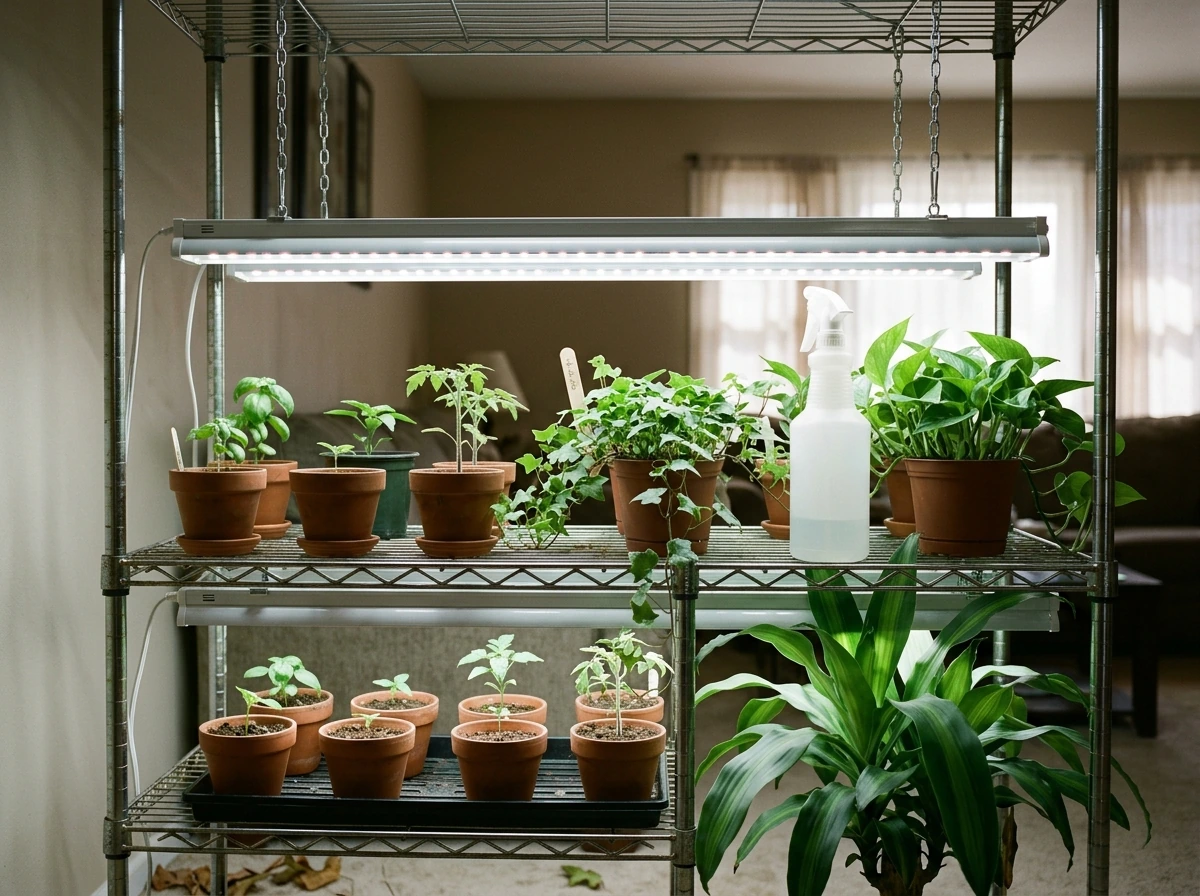
Hang your grow light so it covers the footprint of your growing area as evenly as possible. Most grow light panels have a recommended coverage area listed on the box, and you should trust that more than the maximum square footage some brands claim. A 100-watt LED panel realistically covers about 2x2 to 3x3 feet for plants that need high intensity. For leafy greens and herbs, that same panel can stretch to 3x4 feet. Use adjustable rope hangers or a simple pulley system so you can raise or lower the light as plants grow.
How long to run your lights
Plants need a dark period, so running lights 24 hours a day is not a good idea and will actually stress most plants. Here are the general photoperiod guidelines I follow:
- Seedlings and clones: 18 hours on, 6 hours off
- Leafy greens and herbs: 14 to 16 hours on, 8 to 10 hours off
- Fruiting vegetables (tomatoes, peppers): 16 to 18 hours on during vegetative growth, sometimes reduced to 12 to 14 hours to trigger flowering in certain species
- Low-light houseplants: 10 to 12 hours on is usually plenty
A plug-in timer is one of the best $10 investments you can make for indoor growing. Set it once and forget it. Inconsistent light schedules confuse plants and produce worse results than a consistent shorter photoperiod.
Spacing and airflow
Do not crowd plants under a grow light. Crowded canopies block light from reaching lower leaves and create humid, stagnant air that encourages mold and disease. Give each plant enough room so light can reach most of the leaf surface, and consider a small fan nearby to keep air moving. Good airflow also strengthens stems, which can become weak indoors without the natural movement provided by outdoor breezes.
What plants and results you can realistically expect
Not every plant is equally easy to grow under LEDs, and setting realistic expectations upfront saves a lot of frustration. Here is how I think about it:
- Easiest wins: lettuce, spinach, basil, cilantro, mint, and most leafy herbs. These are low-intensity crops that respond well even to modest LED setups. You can have harvestable lettuce in 4 to 6 weeks under good LED lighting.
- Good intermediate options: pothos, snake plants, peace lilies, and other low-to-medium light houseplants. LEDs help them stay healthy in dark rooms and can improve growth rate noticeably.
- More demanding but doable: tomatoes, peppers, cucumbers. These need a high-intensity grow light and plenty of run time. Expect slower growth than outdoor plants, but fruiting is definitely achievable with the right setup.
- Challenging: fruiting trees, large outdoor plants, or anything that naturally needs full sun all day. LEDs can supplement but rarely fully replace the intensity of direct outdoor sunlight for these.
In terms of growth rate, plants grown under well-matched LED lighting typically grow somewhat slower than they would in optimal outdoor conditions, but much faster than plants struggling in a dark indoor corner. Under a proper grow light, you should see visible growth week over week. If a plant looks the same after three weeks, something is off.
Common mistakes, troubleshooting, and safety
Weak or leggy growth
Leggy, stretched-out growth where stems are long and thin with widely spaced leaves is the classic sign of insufficient light. The plant is reaching for more. Fix this by moving the light closer, upgrading to a brighter light, or extending the photoperiod slightly. Do not go overboard on all three at once. Make one change, wait a week, and see how the plant responds.
Leaf bleaching or curling
If the newest leaves near the top of the plant are turning pale, yellowish, or bleached, and the light is very close, you may have light stress. Raise the fixture a few inches and see if new growth comes in with normal color. This is more common with higher-powered grow lights than with shop lights or regular LEDs.
Heat and safety
Modern LED grow lights run much cooler than older HID or fluorescent systems. Most quality LED panels produce minimal heat at the canopy level, though the driver (the box that converts power) can get warm. Make sure it is not enclosed in a tight space without ventilation. As for fire risk, a properly made LED grow light plugged into a correctly rated outlet is no more dangerous than any other household appliance. Check that your extension cords and power strips are rated for the wattage you are running.
Eye comfort and glare
LED grow lights, especially blurple ones, can be uncomfortable to look at directly. This is primarily a glare and brightness issue, not a radiation or health hazard. If you need to work in the space regularly, consider a full-spectrum white grow light, which is easier on the eyes. Inexpensive grow light glasses (yellow-tinted) are also available and make it much easier to inspect plants without squinting. You do not need to worry about grow lights giving you a tan or causing any health effects from normal household use at recommended distances. That is a common misconception the site addresses elsewhere in more detail.
Not using a timer
This is probably the most common beginner mistake I see. People forget to turn the lights on, or leave them running around the clock because it is easier. Both hurt your plants. A basic mechanical outlet timer costs very little and solves this completely. Get one before you start your setup, not after.
Your next steps to get started today
- Decide what you want to grow. Herbs and leafy greens are the easiest starting point and give you fast feedback.
- Choose your light. For herbs and greens, a single LED grow panel in the 30 to 60 watt range, or a pair of 4-foot LED shop lights hung close, is enough to start. For fruiting vegetables, look for a full-spectrum LED panel with clear PPFD specs.
- Set your light height at 12 to 18 inches above seedlings for a grow light, or 4 to 6 inches for a shop light.
- Buy a plug-in timer and set it for 14 to 16 hours on for most plants.
- Monitor your plants weekly. Look for steady growth, compact stems, and healthy leaf color. Adjust height or duration based on what you see.
- If growth is slow or leggy after two weeks, lower the light or extend the photoperiod by an hour or two before making any other changes.
Growing plants under LEDs is genuinely approachable, even if you have never done it before. The technology works, the science is solid, and you do not need expensive equipment to get started. Pick a forgiving plant like basil or lettuce, get a decent grow light, set a timer, and pay attention to what your plants are telling you. That is really all there is to it.
FAQ
How can I tell if my LED grow light is actually strong enough (not just bright)?
Look for a grow light that specifies PPFD (at a stated distance), or at least provides a clear coverage area and power output. If the listing only mentions “watts” or “brightness,” you may end up guessing distance and hours, which is why seedlings become leggy or fruiting plants underperform.
Do I need a timer, or is it fine to manually turn the lights on and off?
For many home setups, a timer is more reliable than “remembering.” Set it so lights turn on at the same times every day, since inconsistent schedules can cause uneven growth and more stress during transitions.
Can I use LEDs as supplemental light instead of full-time grow lighting?
Yes, LEDs can work with plants that tolerate shorter winter days, but you still need to match photoperiod and intensity to the plant. In general, if a plant is used to sun outdoors, indoor LED growing usually needs both enough intensity and a stable light schedule to replace that seasonal energy.
What’s the best way to adjust light distance if my plants don’t look right?
Beginners often start too far away. A practical approach is to begin at the recommended mounting distance, then adjust after 5 to 7 days based on leaf color and stretch: pale or bleached new growth usually means the light is too close or too intense, while wide spacing between leaves suggests it is too far.
If my plants look slow, should I just run the light longer each day?
More “hours” is not always better. Overlong photoperiods can reduce vigor and increase disease risk because plants spend less time in dark recovery. Use a timer and adjust gradually within the typical ranges for the plant type you are growing.
Are regular warm-white or cool-white LED bulbs completely useless for growing food?
Warm-white or cool-white bulbs can support low-light houseplants, but they are usually inefficient for crops because a lot of output lands in wavelengths plants use less. If your goal is herbs for frequent harvest or fruiting plants, a spectrum designed for red and blue will get better results per watt.
Why do my lower leaves turn yellow even though the top looks okay under the light?
Crowding is a common hidden problem. Even if the light is adequate above the canopy, blocked lower leaves reduce total usable energy and can trap humid air. Leave space between plants and consider a small fan to keep stems firm.
Do LED grow lights create heat stress or fire risk in real indoor setups?
Yes. Keep an eye on airflow and temperature near the canopy. Cooler canopies are safer for leaf color, but if the fixture is too hot, the driver overheats and performance can degrade. Ensure the fixture has room to breathe, not an enclosed box without airflow.
Should I change the light height or schedule as seedlings become larger plants?
Most growers need to swap from “seedling mode” to “veg or fruit mode” by raising intensity or adjusting spectrum after plants establish. If you keep the same light height and hours for weeks, you may outgrow the fixture’s delivered PPFD, leading to slow growth or delayed flowering.
Why do tomatoes or peppers grow leaves but don’t flower well under my LED?
It depends on the plant, but many fruiting crops need more than leafy greens. Tomatoes and peppers typically require higher PPFD to produce well, so if you are using a low-power panel, you may still get plants but fewer flowers and fruits.
If a grow light is labeled full spectrum, do I still need to worry about red and blue?
Some “full spectrum” lights include more white, which can be comfortable, but they still vary widely in actual red output and delivered intensity. The key is how much usable red and blue the fixture provides and whether it reaches your canopy strongly enough.
Next Articles
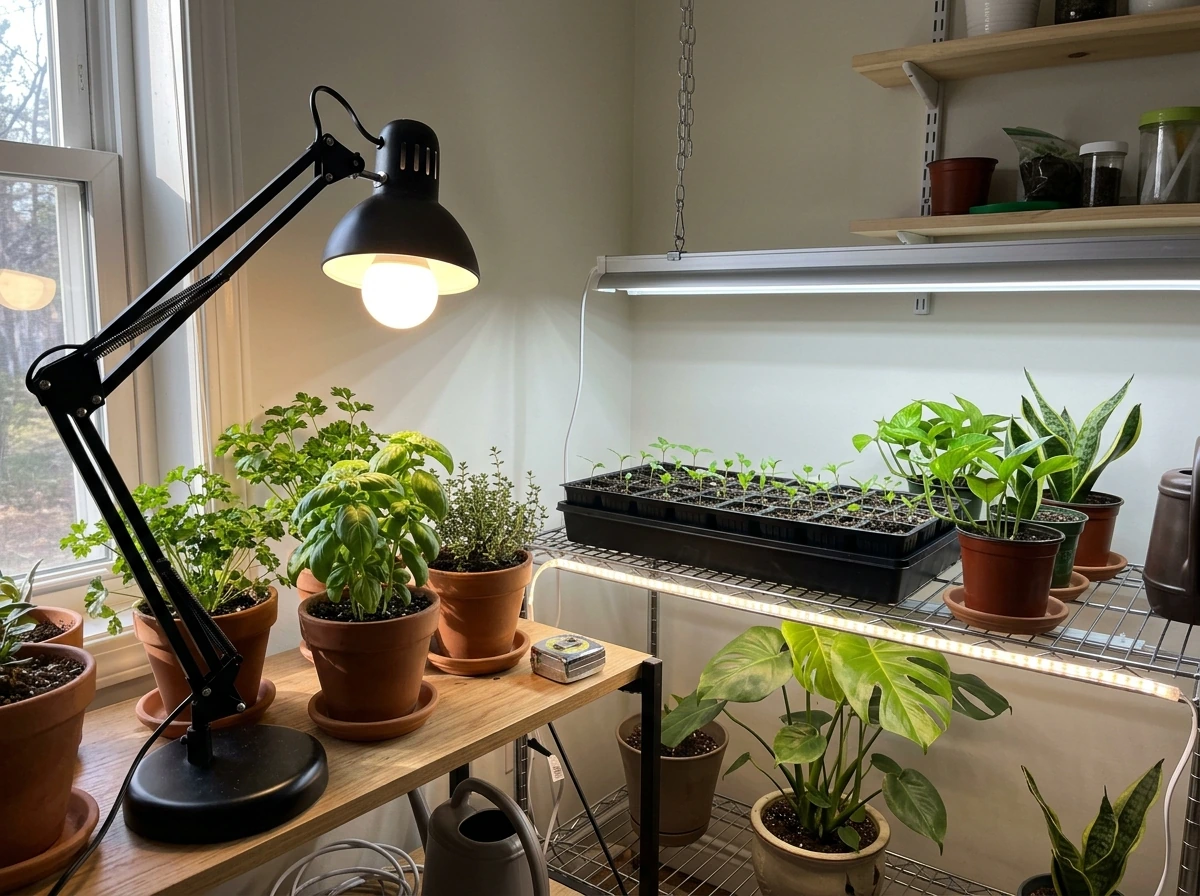
Can I Use Normal LED Lights to Grow Plants Indoors?
Yes, some normal LEDs can grow plants indoors, but results depend on spectrum, intensity, distance, and timing, not the
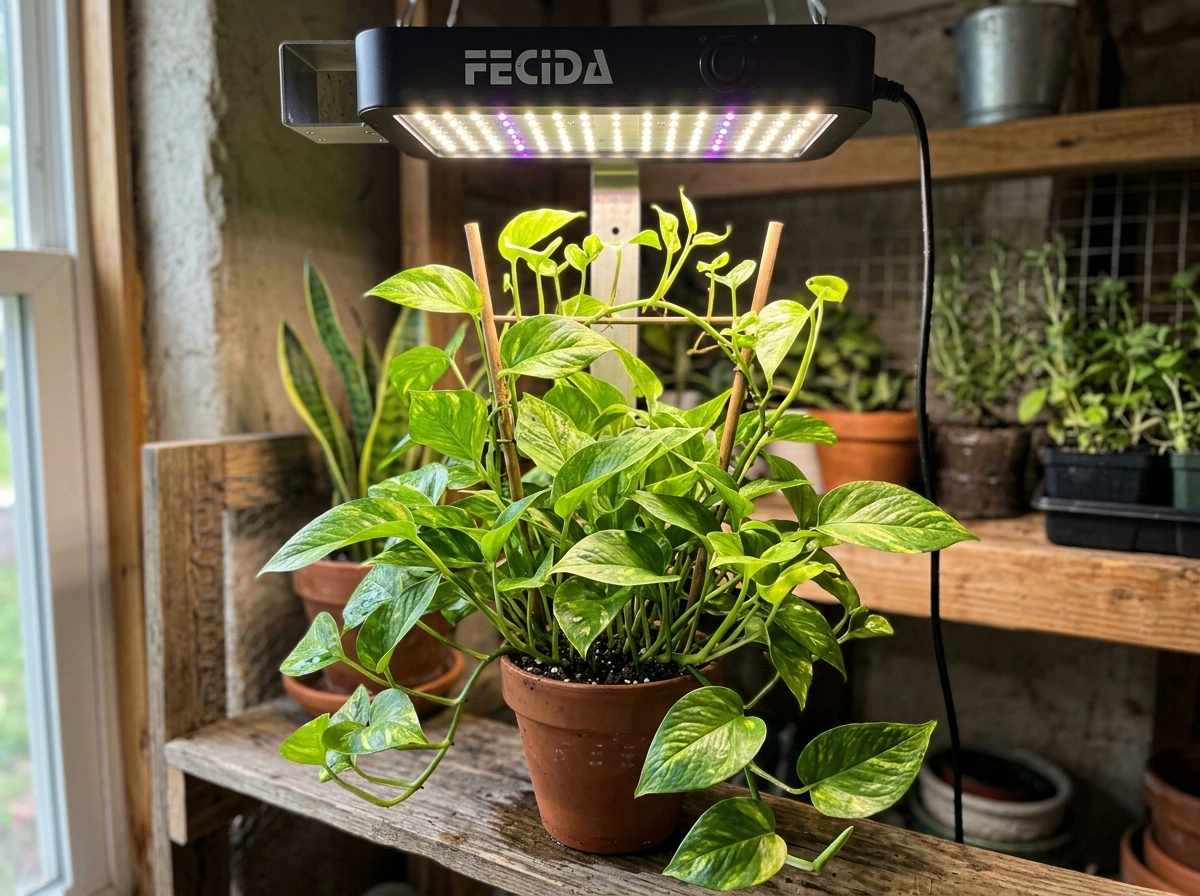
Will LED Lights Help Plants Grow? A Practical Guide
Learn how LED lights aid plant growth, what spectra and PPFD to target, and how to set distance and hours for results.
Can White LED Lights Grow Plants? Setup, Results, Fixes
How to use white LEDs for plant growth: spectrum limits, best settings, expected results, and troubleshooting fixes