Yes, white LED lights can grow plants. I've done it myself with a basic cool-white LED strip and a pot of basil sitting on a shelf, and it worked. But there's a real gap between "technically works" and "works well," and that gap depends on a few things you can actually control: the spectrum of the white LED you pick, how close you hang it, and how long you run it each day. This guide covers all of that so you can get genuine results, not just barely-alive plants.
Can White LED Lights Grow Plants? Setup, Results, Fixes
Marcus Holloway
24 Mar 2026
The short answer: yes, but with an asterisk
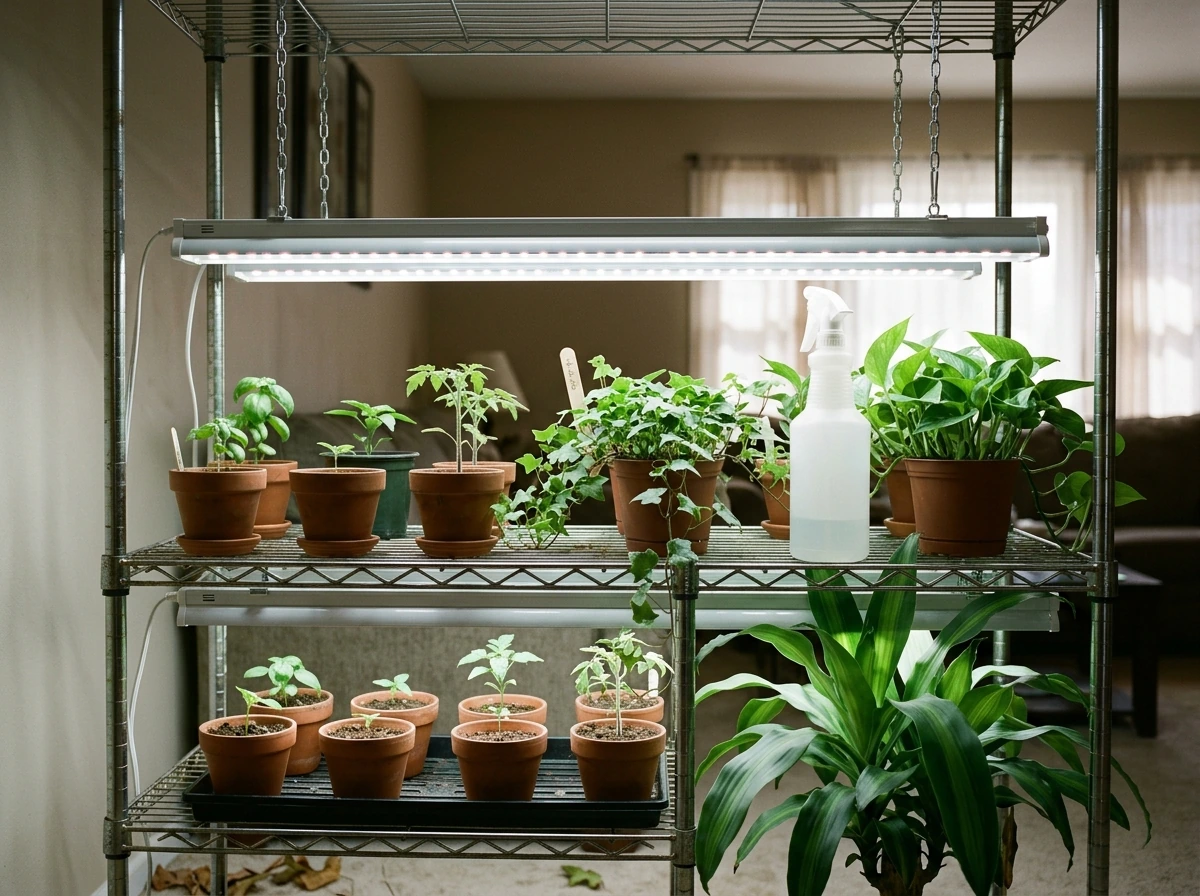
White LEDs work for plant growth because they aren't truly "white" at the physics level. Most white LEDs are blue LEDs coated with a phosphor that converts some of that blue light into longer wavelengths, producing a broad spectrum that covers green, yellow, and some red. That means you're getting light in the 400–700 nm range, which is exactly what plant scientists call photosynthetically active radiation (PAR). Plants can absolutely use it.
The asterisk is this: white LEDs are not optimized for plants. Purpose-built grow lights are engineered to deliver most of their photons right at the peaks plants respond to best, around 450 nm (blue) and 660 nm (red). A cool white LED might deliver a red-to-blue ratio of about 0.66, meaning it's actually more blue than red. A typical horticultural grow light runs a ratio closer to 4:1 red to blue. That mismatch matters for flowering, fruiting, and overall efficiency, but for foliage growth and seedlings, white LEDs can genuinely get the job done.
How white light actually affects your plants
Plants don't see light the way we do. They don't care about brightness or how appealing the light looks to your eye. What matters to them is the number of photons hitting their leaves, specifically in the 400–700 nm PAR band, and which wavelengths those photons sit at.
Blue light (around 450 nm) drives compact, leafy growth, regulates stomatal opening, and is important for photomorphogenesis, basically the shape and structure of the plant. Red light (around 660 nm) is the powerhouse for photosynthesis. NASA research has noted that red photons at 660 nm drive photosynthesis with roughly 25% higher quantum efficiency than blue photons. That's why grow lights lean heavily red. White LEDs give you both, but in a ratio that's skewed toward blue compared to what plants would ideally prefer.
Green light, which white LEDs also produce in abundance, isn't wasted. It penetrates deeper into leaf tissue and lower canopy layers, and it plays a real role in photosynthesis, just a smaller one than red or blue. The broad spectrum of a white LED is actually one of its underrated strengths for beginners: it covers the full PAR window even if it doesn't maximize efficiency at either peak.
What to realistically expect compared to grow lights
Here's where I want to be honest with you. White LEDs can support healthy foliage growth, keep seedlings alive and compact, and maintain most houseplants through low-light winters. What they struggle with is triggering and sustaining flowering and fruiting, mostly because of that lower red output. A controlled lettuce study found comparable biomass between 6500 K and 2700 K white LEDs when photon delivery was similar, which tells you CCT (color temperature) matters less than getting enough light to the plant. But when researchers supplemented white LEDs with additional red, photosynthesis and leaf growth both improved.
| Goal | White LEDs | Purpose-built Grow Lights |
|---|---|---|
| Seedling development | Works well | Works well |
| Foliage / leaf growth | Works well | Works well |
| Herbs (basil, mint, parsley) | Works well | Works well |
| Flowering houseplants | Limited; may not trigger bloom | Works well |
| Fruiting crops (tomatoes, peppers) | Poor without red supplement | Works well |
| Energy efficiency per photon | Moderate | High |
| Cost to get started | Low | Moderate to high |
If you're trying to grow lettuce, herbs, tropical foliage plants, or start seeds, white LEDs are a completely legitimate tool. If you're counting on tomatoes or getting your orchid to rebloom, you'll hit a wall and should look at purpose-built horticultural fixtures instead. can led grow lights burn plants
Setting up white LEDs for real results
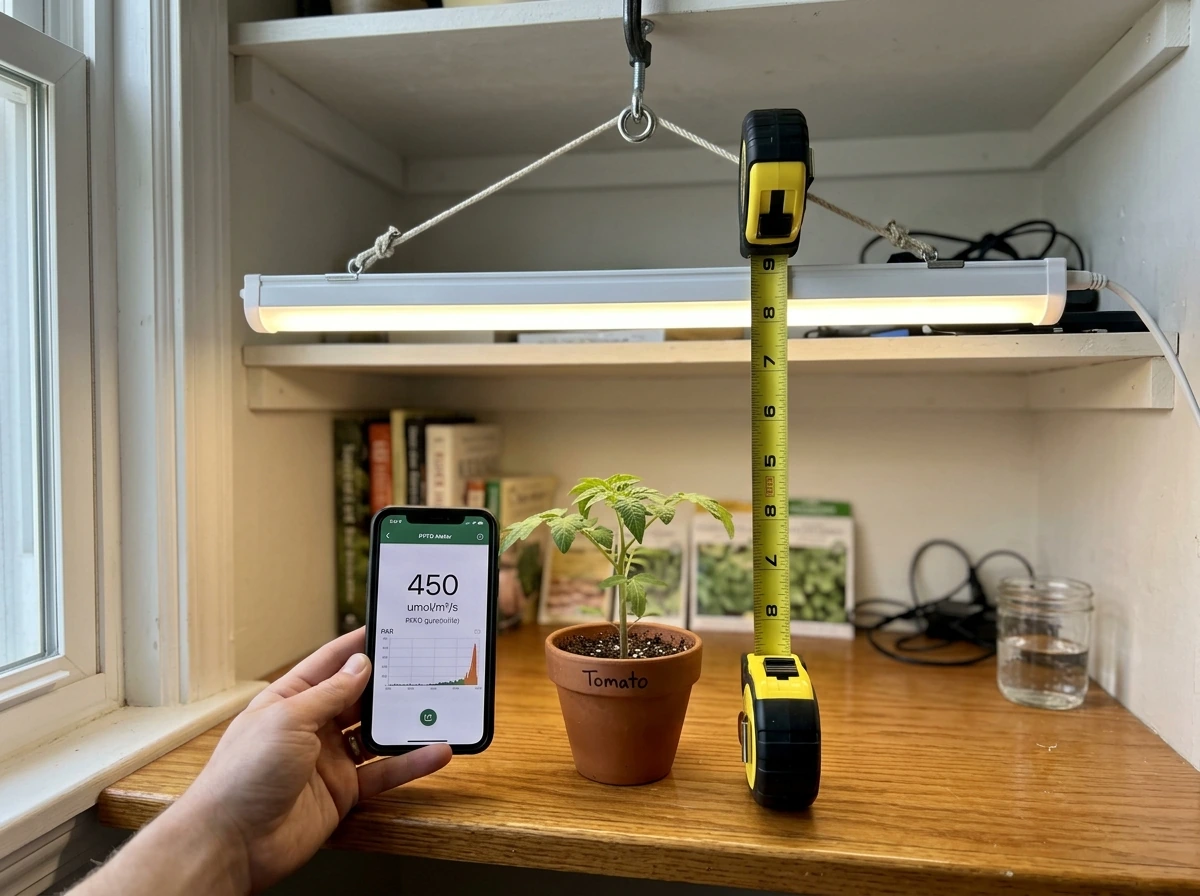
The setup variables that matter most are intensity (PPFD), distance, and duration. Get these right and white LEDs can produce genuinely healthy plants. Get them wrong and you'll have leggy, struggling plants no matter how good your LED is.
Intensity: how much light is enough
Intensity for plants is measured in PPFD (photosynthetic photon flux density), in micromoles per square meter per second. Forget lumens here, those are a measure of brightness for human eyes, not plant growth. University of Maine extension guidance puts seedlings and clones under 100 PPFD, low-light houseplants in the 50–150 PPFD range, and flowering or fruiting plants between 400 and 1,200 PPFD. Standard household LED bulbs and strips usually top out around 50–150 PPFD at close range, which is enough for leafy greens and seedlings but not flowering crops.
Distance: closer than you think
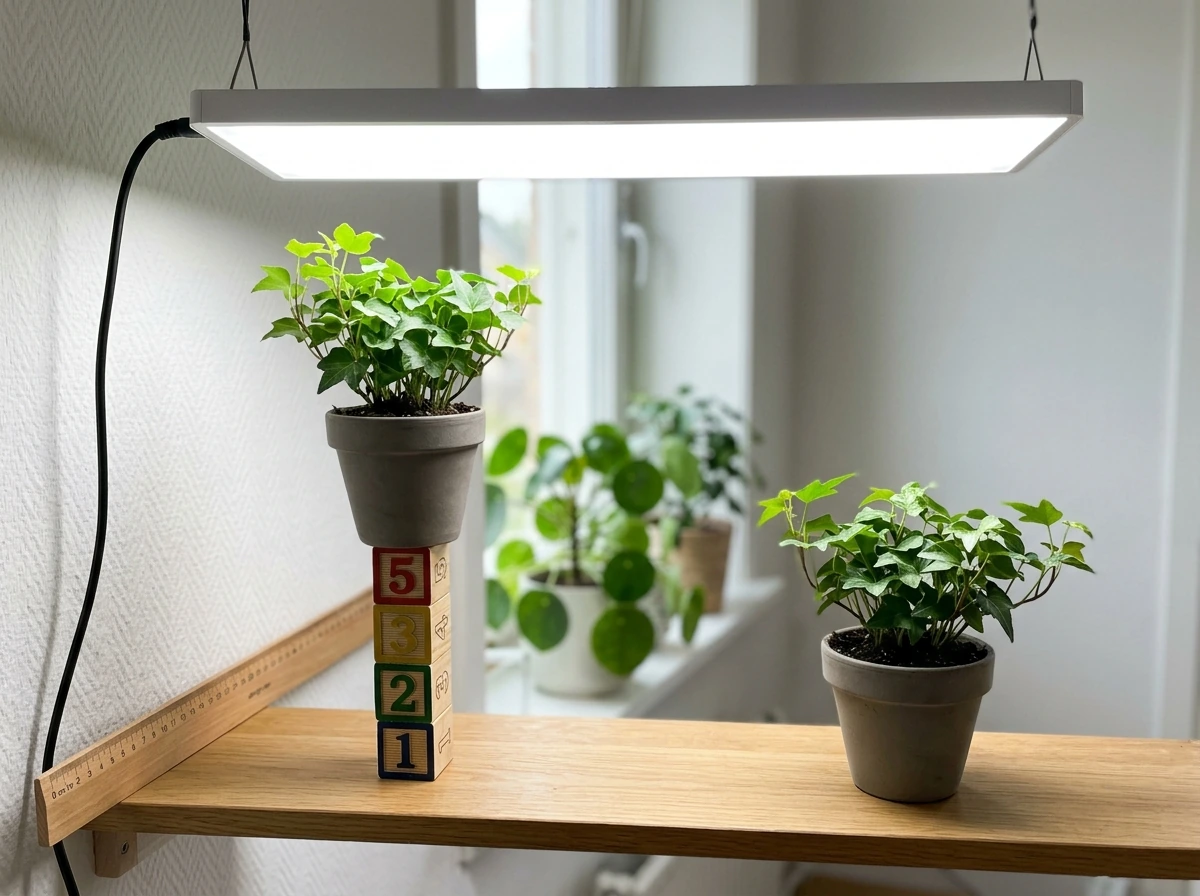
Light intensity drops dramatically with distance. A white LED shop light that delivers adequate PPFD at 6 inches from your plant might deliver less than a quarter of that at 24 inches. For seedlings, get your white LEDs within 4–8 inches of the canopy. For established foliage plants, 6–12 inches is a reasonable range. If you're using a basic LED panel or strip, start closer and watch for any heat stress, though in my experience most white LEDs run cool enough that heat isn't the limiting factor, distance is.
Duration: how long to run them each day
Plants need a daily dose of light, not just instantaneous brightness. The concept researchers use is DLI (daily light integral), which is the total number of photons delivered per square meter per day. There's a useful formula for this: Hours = DLI ÷ (PPFD × 0.0036). So if your LED delivers 100 PPFD and your seedlings want a DLI of about 6, you'd need to run the light for about 17 hours a day. Practical photoperiod targets are 16–18 hours per day for seedlings and young vegetative plants, and 14–16 hours for most flowering houseplants. I use a $10 plug-in timer and set it, then forget it.
One thing worth adding: most plants need a dark period. Running lights 24 hours a day isn't beneficial and can actually stress some plants. Stick to the photoperiod windows above.
Reflectors and spacing
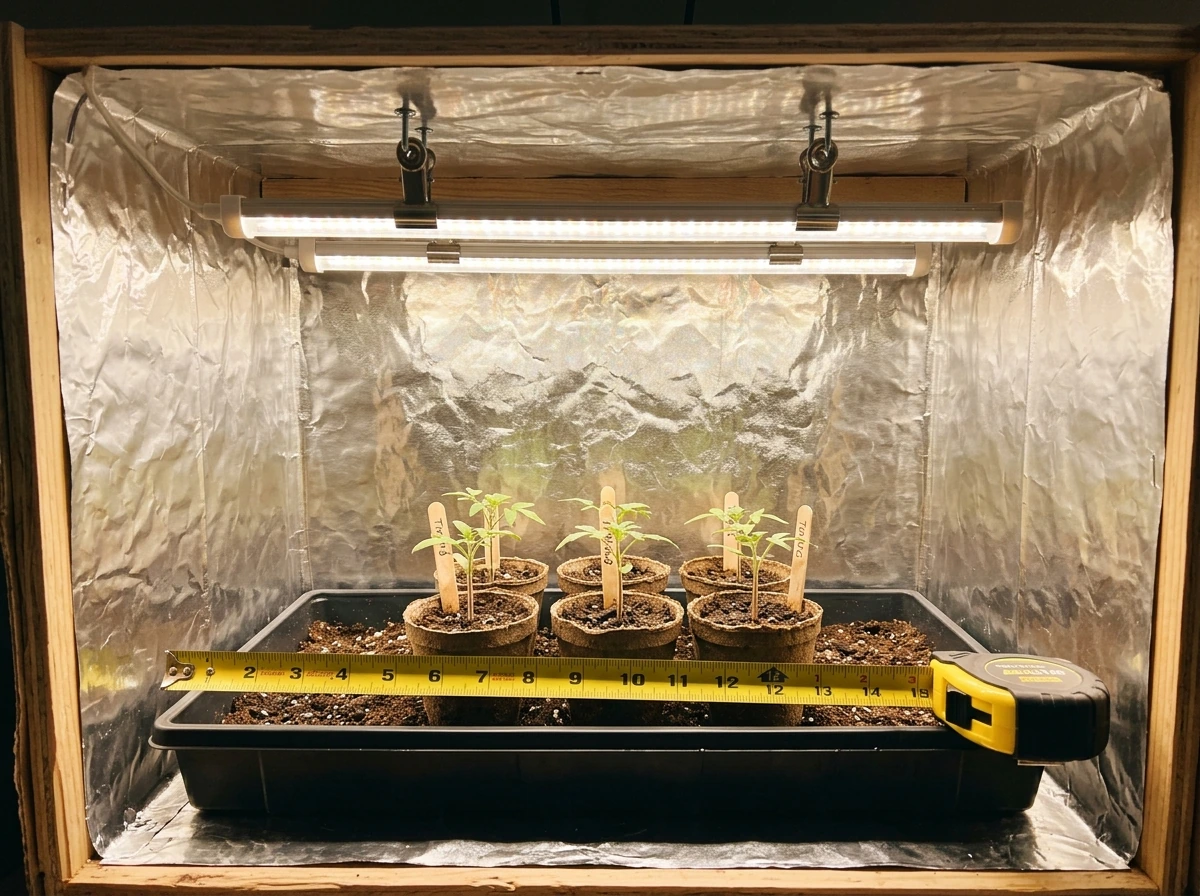
If you're using LED strips or bars, spacing them evenly across the growing area and adding a simple white-painted or mylar reflector behind them can meaningfully increase the usable light that reaches your plants. Even a piece of white foam board propped behind a shelf setup makes a noticeable difference. For a single plant or a small cluster, one well-positioned LED panel directly overhead is usually enough.
Choosing the right white LEDs for plants
Not all white LEDs are equal for plant use. Here are the specs that actually matter and what to look for.
Color temperature (CCT): cool vs warm white
CCT is measured in Kelvin. Cool white is roughly 5000–6500 K and has more blue output. Warm white is around 2700–3000 K and has relatively more red and orange output. Research on lettuce found that 6500 K and 2700 K produced similar biomass when photon delivery was matched, so neither is dramatically better for basic foliage growth. That said, if you're growing flowering plants or fruiting herbs, leaning toward warm white (2700–3000 K) gives you a slightly better red fraction. For seedlings and leafy greens, cool white (5000–6500 K) is perfectly fine and is the most commonly available.
CRI: does it matter for plants?
CRI (color rendering index) measures how accurately a light reproduces colors to the human eye, on a scale to 100. For plant growth, CRI doesn't directly predict performance the way PPFD or spectrum peak does. However, a higher CRI (90+) generally indicates a broader, fuller spectrum with better red content, which tends to be more useful for plants than a low-CRI fixture. Think of high CRI as a rough positive signal, not a guarantee.
Wattage: how much power do you need
Wattage tells you power consumption, not light output for plants. Two 20-watt LEDs can produce very different PPFD depending on design efficiency. That said, for a single plant in a small pot, a 10–20 watt LED positioned close (6–10 inches) is usually sufficient. For a 2x2 foot growing area with multiple plants, you'll want 40–80 watts of quality white LED output minimum. If a manufacturer claims their light covers a large area at low wattage, be skeptical.
Beam angle
A narrow beam angle (30–60 degrees) concentrates light on a small area and is better for a single tall plant. A wide beam angle (90–120 degrees) spreads light across a broader canopy and is better for a shelf of seedlings or a flat tray. Most LED shop lights and panel lights default to wide angles, which works well for most home plant setups.
| Spec | Best choice for plants | Why |
|---|---|---|
| CCT | 2700–3000 K (warm) for flowering; 5000–6500 K (cool) for foliage/seedlings | Shifts red-to-blue ratio slightly toward plant preference |
| CRI | 90+ preferred | Broader spectrum, better red content |
| Wattage | 10–20 W per plant; 40–80 W per 2x2 ft area | Match to coverage area, not a simple higher-is-better rule |
| Beam angle | 90–120° for trays; 30–60° for single plants | Controls coverage area and intensity concentration |
When your plants aren't growing: how to troubleshoot
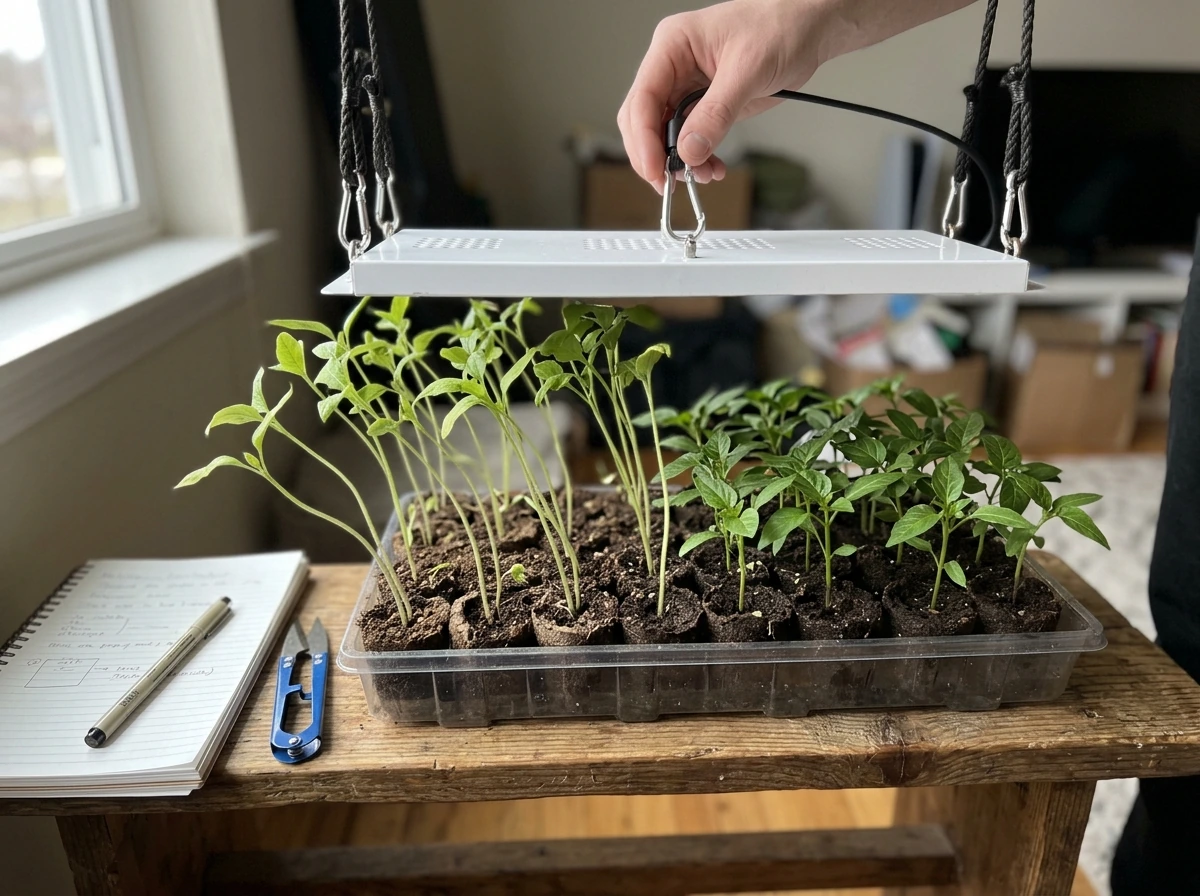
Most problems I've seen (and made myself) with white LED setups come down to one of three things: not enough light, wrong distance, or a spectrum gap. Here's how to diagnose and fix the common ones.
Leggy, stretched stems (etiolation)
If your seedlings or young plants are growing tall and thin with long gaps between leaves, they're stretching toward more light. This is the clearest sign your PPFD is too low. First fix: move the light closer to the canopy, aiming for 4–8 inches for seedlings. Second fix: increase daily hours toward the 16–18 hour range. Third fix: if you're maxed out on distance and hours, you need a brighter or more efficient light source.
Yellowing leaves
Yellowing can mean several things, but if your setup and watering are otherwise consistent, light spectrum or intensity is often the culprit. A white LED that's heavy on blue and light on red can sometimes cause subtle chlorophyll production issues over time. Try swapping to a warmer white LED or supplementing with a small red LED strip. Also check that you're not accidentally running the light too far away, reducing effective PPFD below what the plant needs for its growth stage.
Slow or stalled growth
If the plant looks healthy but isn't growing much, the most common cause is insufficient PPFD for the growth stage. Check your light's distance and compare it against the stage targets: seedlings need at least 50–100 PPFD, most vegetative houseplants want 150–300 PPFD, and flowering plants need 400+ PPFD. If you don't have a PAR meter (most beginners don't), a practical rule of thumb is that if you can comfortably read a book under the light from your plant's position, it's probably not bright enough for active plant growth.
No flowering or fruit set
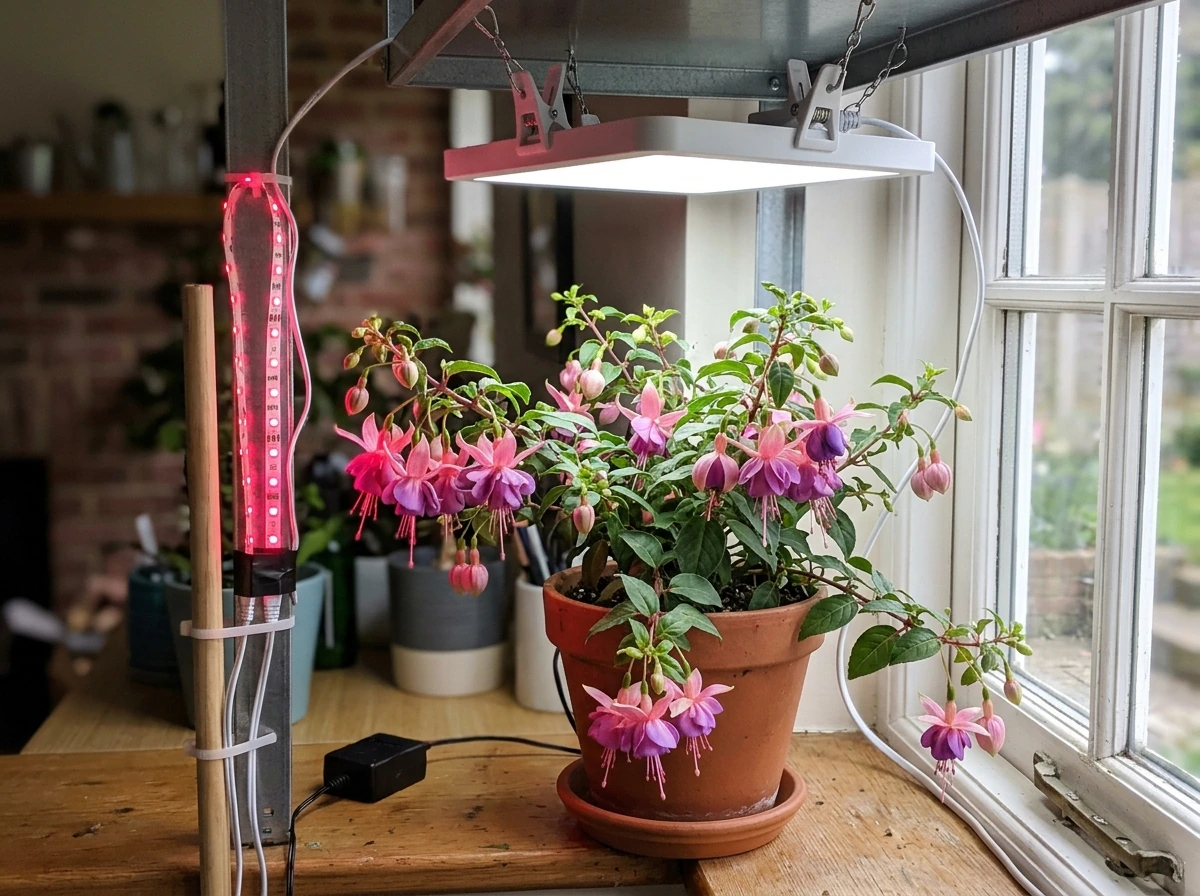
This is where white LEDs hit their biggest limitation. If your plant isn't flowering, it's most likely a spectrum issue, specifically a lack of red photons at 660 nm. The fix here is either to add a dedicated red LED supplement or to switch to a purpose-built grow light. You can also check photoperiod: some plants require specific day-length triggers to bloom, and running lights for the wrong number of hours can prevent flowering regardless of spectrum.
Safety myths and real considerations
People ask me about grow lights causing cancer or giving you a tan, and I get why those questions come up. LEDs look intense, especially the blue-heavy ones. Let me clear this up directly.
Will white LED grow lights give you a tan or cause cancer?
No. Tanning and UV-related skin damage require ultraviolet (UV) light, which starts below 400 nm. White LEDs used for plants operate almost entirely in the visible 400–700 nm range. They produce negligible UV output. There is no credible mechanism by which a white LED plant light causes skin tanning or UV-related cancer risk from normal indoor use. This is a misconception worth putting to rest completely.
What about blue light and eye safety?
This one has more nuance. Photobiological safety standards like IEC 62471 evaluate blue-light hazard with peak weighting around 435–440 nm. Most white LED plant lights fall into low to moderate risk groups under these standards when used as directed. The practical advice is simple: don't stare directly into a bright LED at close range for extended periods. Use basic common sense, the same you'd apply to any bright light source. Occasional glances while watering or adjusting plants are not a meaningful risk.
Heat and fire risk
White LEDs run much cooler than incandescent or HID grow lights. That said, any electrical fixture left on 16–18 hours a day should be treated with basic respect. Use LED fixtures rated for continuous use, don't cover them, make sure there's airflow around the driver (the control box), and don't daisy-chain too many fixtures on one outlet beyond the rated load. I've been running LED shop lights on timers for years without any issues, but sensible electrical habits matter.
Blue light and sleep disruption
This one is actually real, though it's about you, not your plants. Running cool white LEDs in a room where you sleep at night can affect your melatonin levels and make it harder to fall asleep. Harvard Health research has documented how blue-heavy light at night affects circadian rhythms. The easy fix is to put your plant light on a timer that turns off a couple of hours before you go to bed, or to set it up in a room you're not sleeping in. Your plants don't care what time of day the light is on, so schedule it for your convenience.
My honest recommendation
If you have white LEDs already, or you're looking for a low-cost way to get started with indoor growing, go ahead and use them. Get a warm white (2700–3000 K) LED with a CRI of 90+ if you can, hang it 6–12 inches above your plants, and run it 16 hours a day on a timer. You'll grow healthy herbs, seedlings, and foliage plants. If you want to go further into flowering crops or fruiting plants, that's when it makes sense to invest in a purpose-built grow light with the right red-to-blue ratio. The site has more on choosing between LED types and understanding what results to expect at different growth stages, so dig into those if you want to level up your setup.
FAQ
Can I grow plants with normal household white LED bulbs, not grow lights?
Yes, but you need a plan for both intensity and spectrum. A typical household LED bulb may only deliver enough PPFD for seedlings and leafy plants when placed very close (often within a few inches), and many bulbs are blue-heavy or limited in usable red. If your plants stretch or stay pale, switch to a warmer white bulb (around 2700–3000 K) or add a small red LED supplement, then confirm you are running a realistic DLI with a timer.
Is it bad to leave white LED lights on 24/7?
DLI and photoperiod matter more than “how bright it looks.” If you run too many hours, some plants show stress signs like leaf tip burn, wilting, or failure to maintain healthy new growth, especially in smaller pots where conditions swing faster. Start in the article’s range (about 16–18 hours for seedlings/young veg, 14–16 for many flowering houseplants) and adjust based on growth behavior after a week.
Will adding a reflector behind LED strips significantly improve results?
Reflectors help, but they do not replace distance and PPFD. If light is spreading past the canopy, adding a back reflector (white paint, mylar, or white foam board) can increase what your plants actually receive, especially on shelves. Positioning the fixture closer and using multiple evenly spaced bars usually boosts PPFD more reliably than reflections alone.
My plants are leggy. How do I tell if it is distance versus spectrum?
If you see stretching, it is usually low PPFD, not lack of “right colors.” However, if stretching is accompanied by yellowing or very slow growth despite adequate hours, the light may also be missing enough red. In that case, first move the light closer, then try a warmer white LED (2700–3000 K) before spending on a full grow fixture, and only add a red supplement if you still cannot get steady, compact growth.
Can white LED lighting make plants bloom and fruit, or will they only grow leaves?
Yes, even with white LEDs, some flowering may be possible, but consistent blooms often require day length and enough red photons. Many houseplants and some herbs bloom only after a specific photoperiod or maturity stage, so the same light setup can grow leaves well but fail to trigger flowers. If your plant is “stuck,” verify its bloom requirements first, then consider a warmer white plus targeted red supplementation.
If my plants look stressed, could the LED be too hot even if it feels cool?
Heat is rarely the main limiter for cool white LEDs, but drivers and enclosed fixtures can run warm. Feel the driver/control box and ensure vents are not blocked, keep the fixture rated for continuous indoor use, and avoid covering it with insulation or fabric. If plants show stress right at the canopy, reduce distance slightly and improve airflow before assuming it is a spectrum problem.
How can I measure light for white LEDs if I do not have a PPFD meter?
Look for a measurable check if possible. Without a PPFD meter, the “book reading” rule is a rough screening tool, but it can mislead with glossy leaves or reflective shelves. If you want more accuracy, place a cheap PAR/PPF test device or measure PPFD at canopy height at your target distance, then adjust hours using the DLI formula so you match the stage.
What is the best way to use white LED strips for plants at different heights in the same area?
White LEDs are generally poor at evenly lighting multiple layers of plants because intensity drops with distance. If you use a single overhead bar for a tall plant, the lower leaves may receive too little PPFD and become sparse. For multi-height canopies, use wider spacing with more than one light or keep the canopy uniform by pruning and rotating pots so the receiving intensity stays within a workable range.
If I switch to a higher-watt or different brand white LED, will plants automatically do better?
Not usually, but some white LEDs can be harsh visually and still be inadequate for plants if their photon output is low. If your plants stretch after you change to a different “white” LED, the new one may have a different PPFD at the same distance, or it may have different internal optics (beam angle) that concentrates light. Compare by checking output at canopy height and keep a consistent distance while you test.
Can stray light at night prevent my plants from flowering under white LED grow setups?
Yes, timers can help you avoid accidental light leaks that affect photoperiod-sensitive blooming. Even small indirect light at night from nearby rooms or bright indicator LEDs can interfere with some plants. If you are trying to trigger flowering, keep the grow area dark when the timer is off, and consider a barrier (cardboard or blackout fabric) to block stray light from the setup.
Next Articles
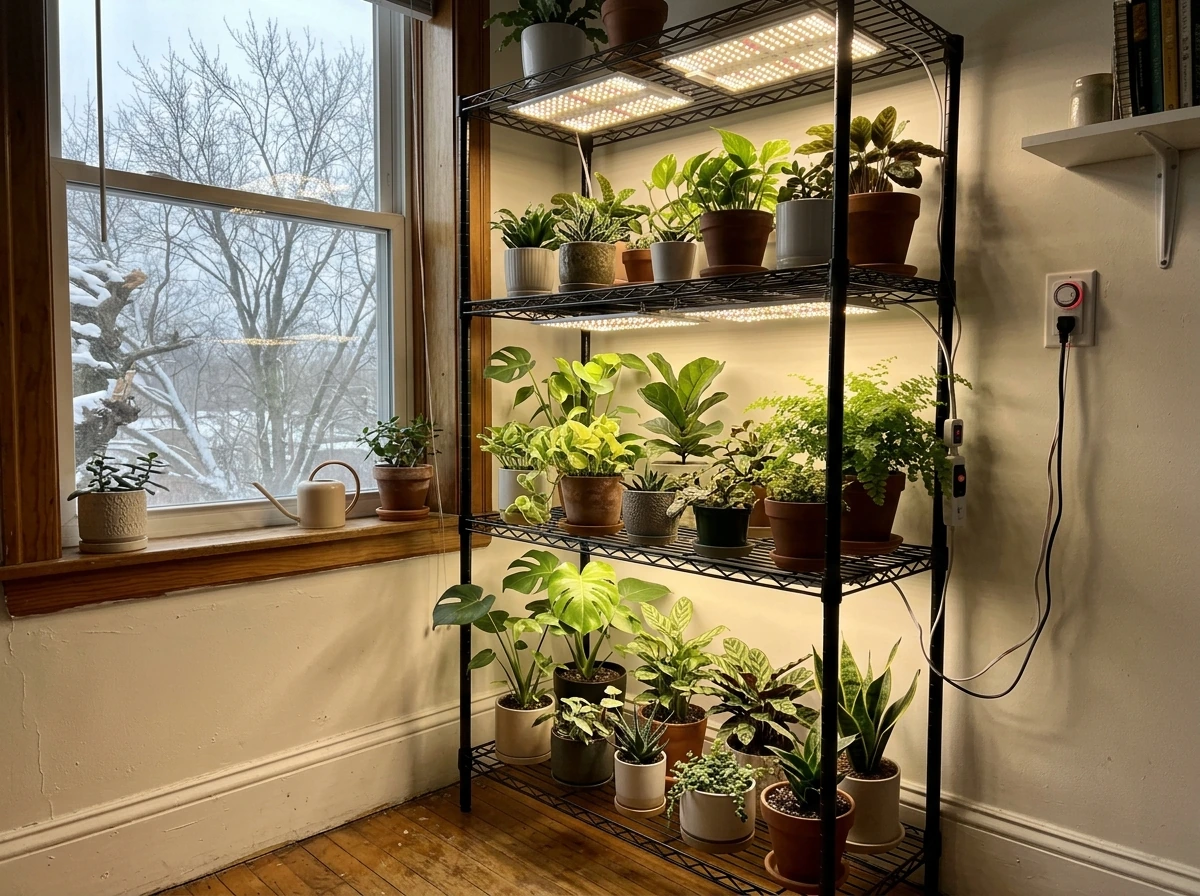
How Long to Leave Grow Lights On in Winter: A Guide
Set winter grow light runtime by plant type and lamp distance. Includes timer schedule, troubleshooting, and safety tips
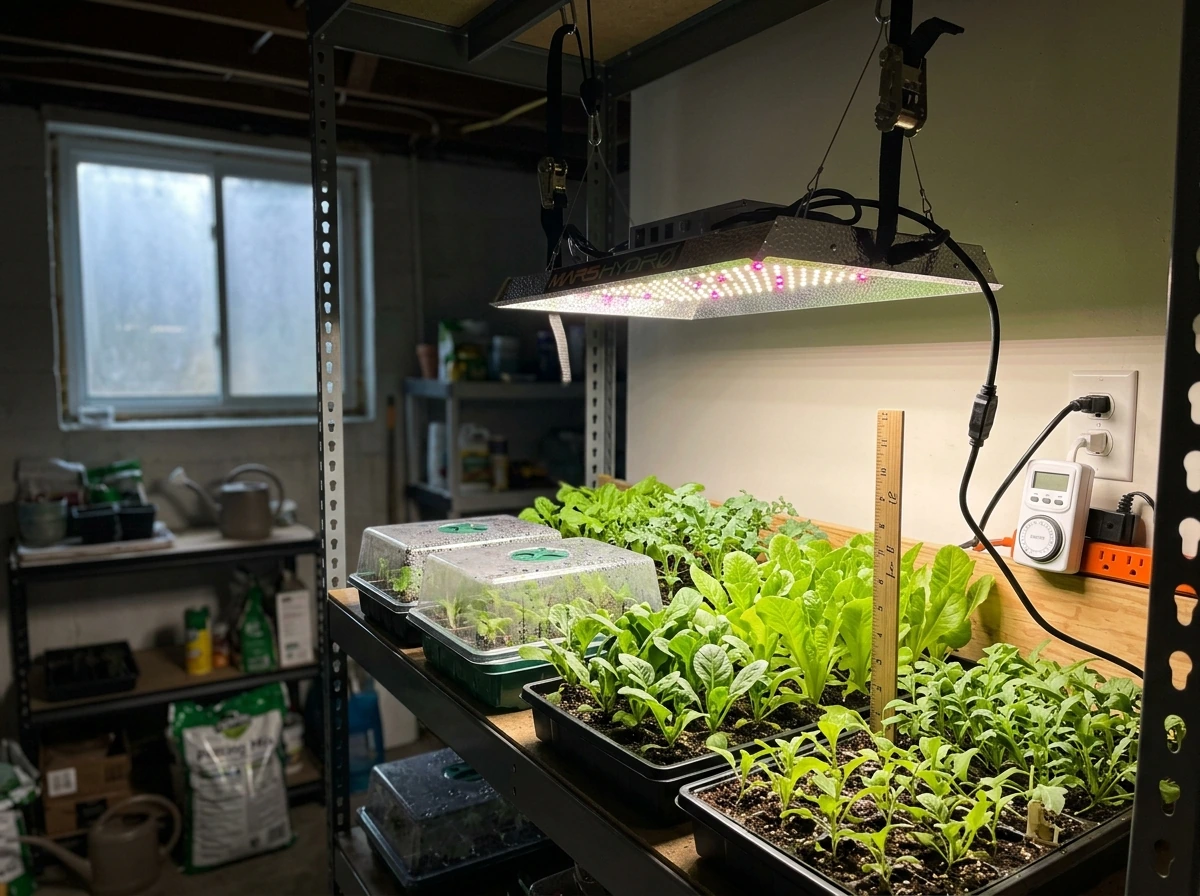
How Long Should Grow Lights Be On for Vegetables
Learn how many hours per day to run grow lights for vegetables, adjusted by crop stage, intensity, distance, and window
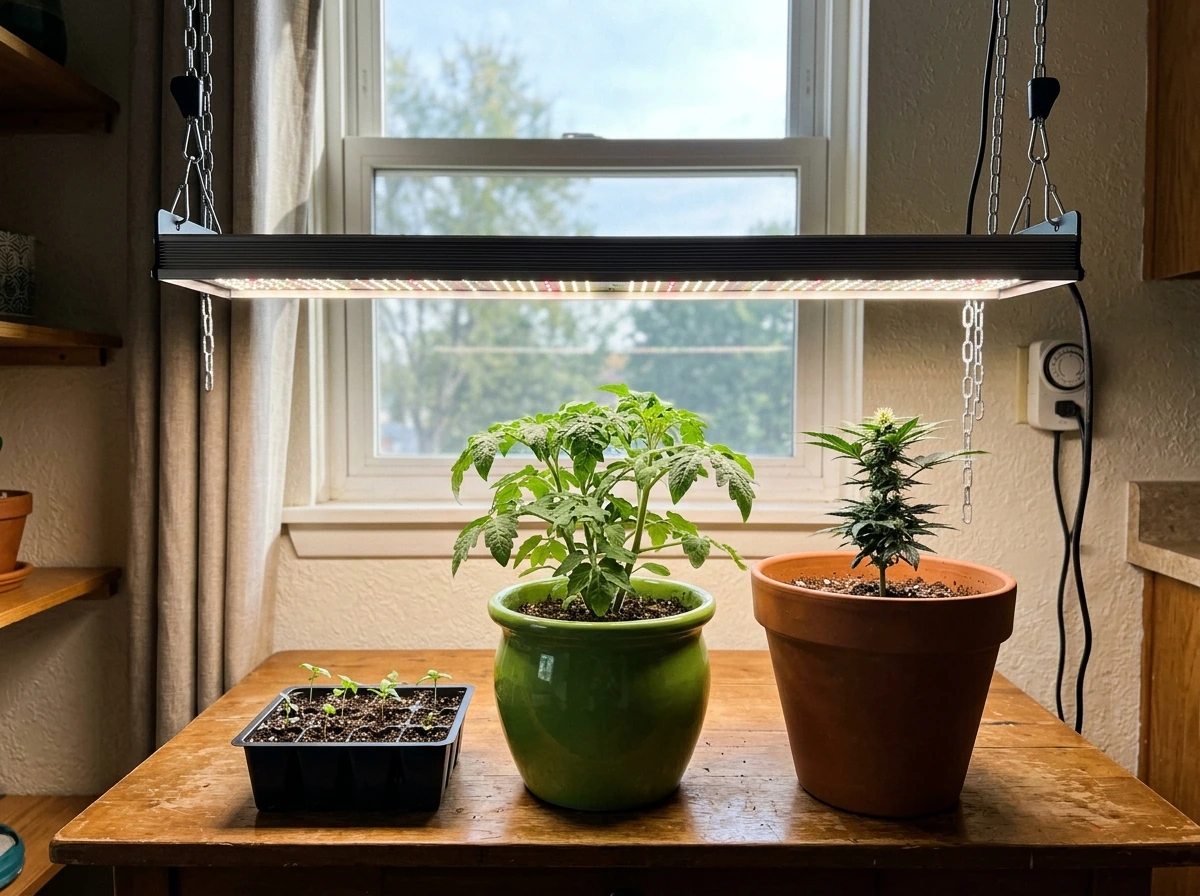
How Long Should Grow Lights Be On Each Day? (Guide)
Daily grow light timing for seedlings, veg, and flowering, plus rules to adjust for distance and intensity.